

 05 October, 2026 |
  Admin
Admin
PTFE Components for Food &
Food and beverage processing equipment needs
Read more
Enquire Now
 22 September, 2026 | Admin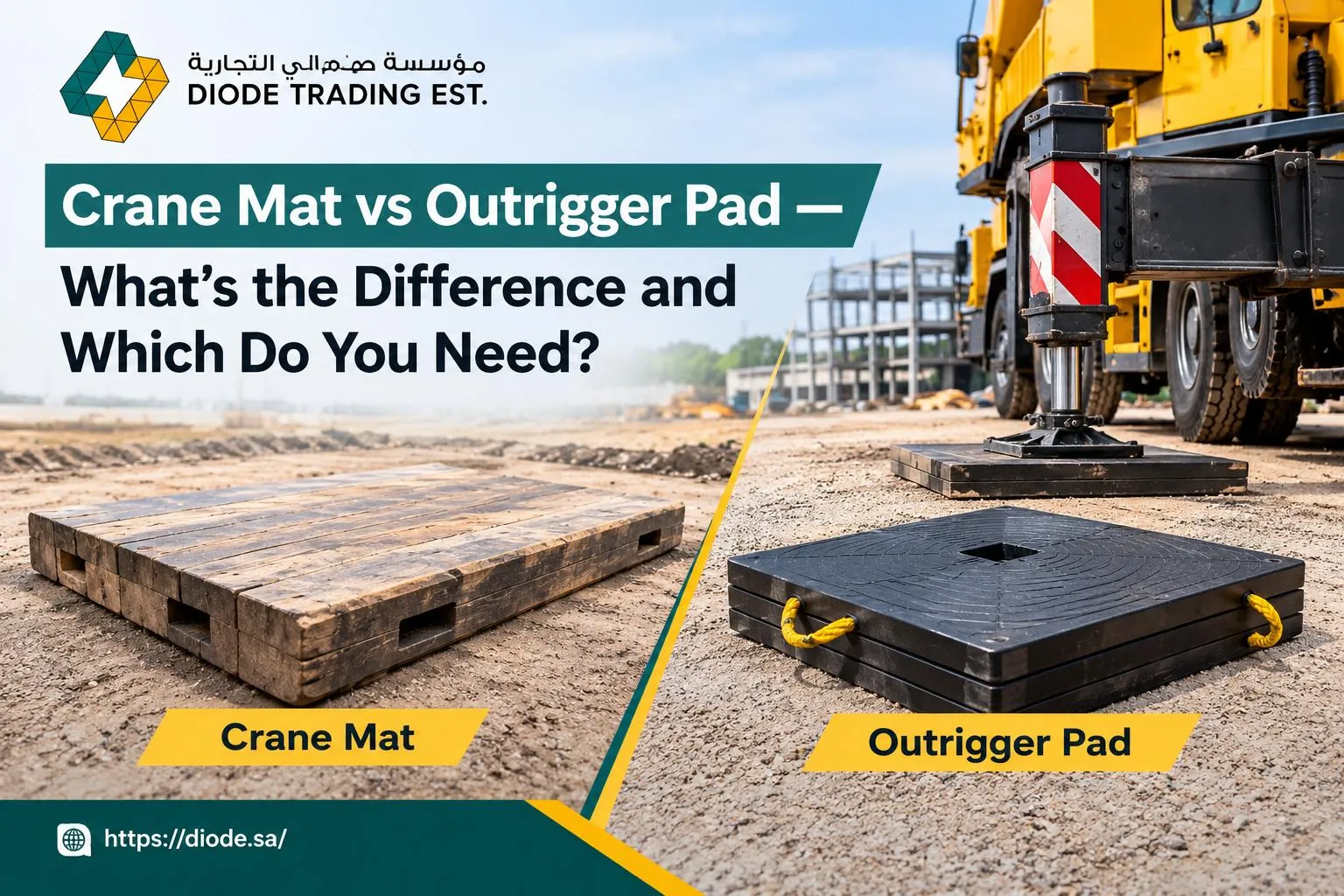
The short answer: an outrigger pad supports a single concentrated point load under one outrigger or stabilizer leg, while a crane mat (or ground protection mat) covers a continuous area to support tracked equipment or vehicle traffic across a wider footprint. They’re not interchangeable, and most larger sites end up needing both.
| Factor | Outrigger Pad | Crane / Ground Protection Mat |
| What it supports | Single point load (one outrigger) | Continuous area (tracks, wheels, foot traffic) |
| Typical size | 600mm to 3000mm, single unit | Multiple interlocking panels covering meters to hundreds of meters |
| Best for | Mobile crane outriggers, pump truck stabilizers | Crawler cranes, haul roads, laydown yards, temporary access |
| Installation | Placed under each outrigger before setup | Laid out and interlocked across the required path/area |
| Reusability | High — pick up and move to next job | High — designed for repositioning across a site |
| Typical material | UHMWPE, rubber, timber, steel | Composite/UHMWPE interlocking panels |
An outrigger pad sits under a single outrigger or stabilizer foot and spreads that specific point load over a larger contact area. It’s a point solution — sized for one load, at one location, for the duration of that lift or operation. Once the job is done, it moves to the next outrigger location on the next job.
A crane mat — sometimes called a ground protection mat, trackway mat, or crawler mat — is designed to cover a continuous area rather than a single point. Crawler crane tracks, for example, distribute load across a much wider footprint than a single outrigger, and a single pad simply doesn’t have enough surface area to handle that. Mats also solve a completely different problem: temporary access roads, laydown yards, and any situation where vehicles or foot traffic need a stable surface across an extended area, not just one load point.
A 50-tonne mobile crane setting up on a semi-prepared site needs four outrigger pads, one under each outrigger foot, sized to the crane’s load chart and the site’s ground condition. This is a textbook outrigger pad situation — no mats required.
A 600-tonne crawler crane’s tracks distribute load across a much larger area than any single pad can cover. This calls for interlocking ground mats laid across the full crane pad area, not individual outrigger pads.
A pump truck’s outriggers apply a sustained, concentrated load for the length of the pour. Individual outrigger pads under each stabilizer leg are the correct solution here.
Equipment moves constantly across a wide, repetitive footprint — pile drivers, delivery trucks, mobile cranes. This typically needs both: mats across the main access routes, and outrigger pads at fixed equipment positions.
Yes — and on larger or more complex sites, this is the norm rather than the exception. A common setup is mats covering access roads and laydown areas, with dedicated outrigger pads used under any mobile crane or pump truck outriggers operating within or alongside that matted area.
1. Can I use a ground protection mat under a single crane outrigger instead of a dedicated pad?
It’s not the ideal use case — mats are engineered for distributed area coverage, not concentrated point loads. A dedicated outrigger pad, sized specifically for that load, is the safer and more appropriate choice under a single outrigger.
2. Which is more expensive, mats or outrigger pads?
Per square meter, mats typically cost more than a single outrigger pad because they’re engineered for continuous coverage and interlocking. But comparing cost only makes sense once you know which one your application actually needs — they’re not substitutes for each other.
3. Do crawler cranes ever use outrigger pads instead of mats?
Generally no — crawler crane track loading is distributed across a much wider area than a single pad’s footprint can cover, which is exactly the problem mats are designed to solve.
See our range of high-visibility safety mats and markers designed to reduce trip hazards across your site.
 05 October, 2026 | Admin
Food and beverage processing equipment needs
Read more 05 October, 2026 | Admin
Pharmaceutical manufacturing environments dem
Read more 04 October, 2026 | Admin
Semiconductor and electronics manufacturing p
Read more