
 05 October, 2026 |
  Admin
Admin
PTFE Components for Food &
Food and beverage processing equipment needs
Read more
Enquire Now
 01 October, 2026 | Admin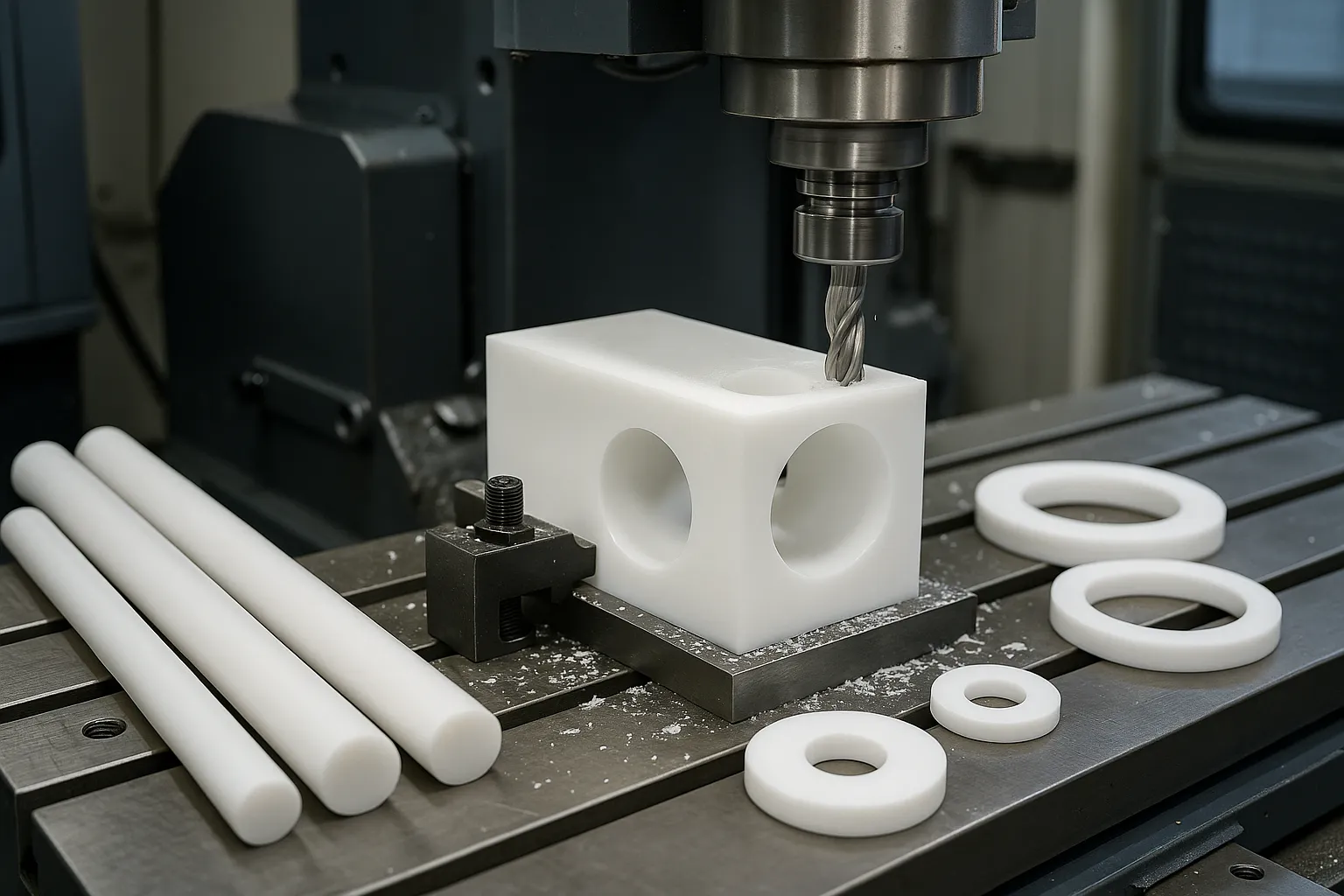
With half a dozen PTFE grades on the market, choosing the right one comes down to answering four questions in order. Skip a step and you risk specifying a grade that fails prematurely — or paying more than you need to.
If the part will see strong alkalis or hydrofluoric acid, rule out glass-filled grades. If it will see strong oxidizers, rule out carbon-filled. If it will see acids or moisture, rule out bronze-filled. If in doubt or exposure is mixed/unknown, virgin or glass-filled PTFE is the safer default.
Static seals and gaskets with light, even loading can use virgin PTFE. Anything with continuous pressure, rotation, or sliding contact (bearings, bushings, wear rings, piston seals) needs a filled grade — glass for general use, carbon for high-PV service, bronze for the heaviest unidirectional loads in non-corrosive settings.
If yes, only virgin PTFE (FDA/USP Class VI compliant) is acceptable — filled grades are not approved for direct food or pharmaceutical contact.
All PTFE grades share the same practical range (roughly -200°C to +260°C), so temperature rarely changes the grade decision — but always confirm against the specific application’s continuous and peak temperatures.
A pump shaft bushing in a desalination plant: exposed to seawater (moisture/mild corrosion) and continuous rotation under load, no food-contact requirement. Bronze-filled is ruled out (corrosion risk from seawater), so glass-filled or carbon-filled PTFE is the right call — carbon-filled if the load/speed combination is high, glass-filled if moderate.

See our range of high-visibility safety mats and markers designed to reduce trip hazards across your site.
 05 October, 2026 | Admin
Food and beverage processing equipment needs
Read more 05 October, 2026 | Admin
Pharmaceutical manufacturing environments dem
Read more 04 October, 2026 | Admin
Semiconductor and electronics manufacturing p
Read more