 23 October, 2026 |
 Admin
Neoprene vs Natural Rubber vs
Choosing the rubber
Bearing pads
Read more
Enquire Now
 23 October, 2026 | Admin
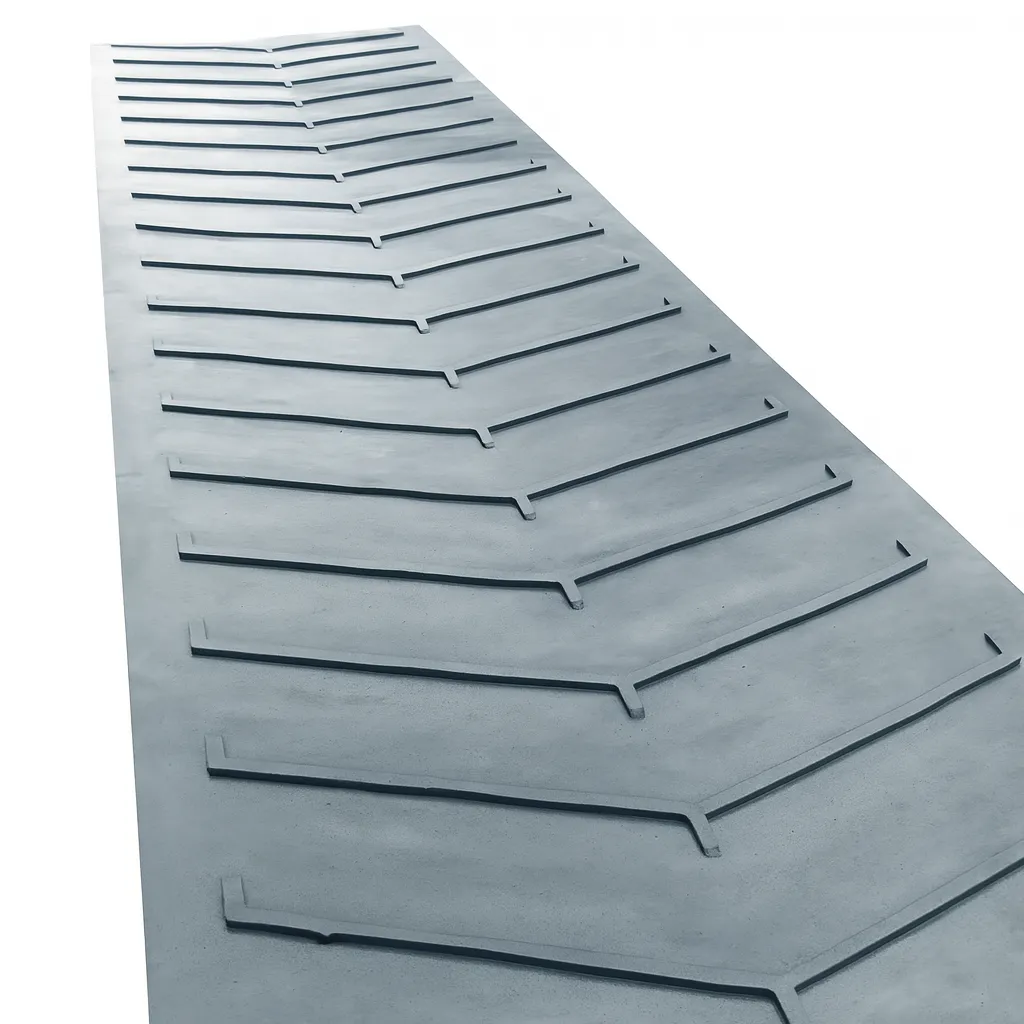
Short answer: Chevron and steel cord belts solve two different problems. A chevron belt has a raised V-shaped pattern that stops material from sliding back on a steep incline. A steel cord belt has steel cables inside to carry the very high tension of long or heavy-duty conveyors. You can combine them when you need both.
People often search for chevron and steel cord belts together because they are both “special” belts. But they are not alternatives to each other. Understanding what each one does makes selection simple.
A chevron belt has a pattern of raised, V-shaped cleats moulded into its surface. The pattern grips the material and holds it in place on a slope.
Why it is needed. On a flat or gently sloping conveyor, loose material stays on a plain belt. As the incline increases, material begins to roll or slide back. For many bulk materials this starts at moderate angles, and the exact limit depends on the material. Chevron profiles are used above that limit, where a plain belt cannot hold the load.
What affects performance.
Typical uses. Mobile and portable conveyors, quarry and mine feeders, loading and unloading ramps and any place where a short, steep conveyor saves space.
Limits. Chevron cleats make cleaning harder, and they tend to wear scrapers and idlers faster than a smooth belt. Plan your cleaning method before you choose the pattern.
A steel cord belt carries its tension in steel cables laid side by side inside the rubber. Steel does not stretch like fabric, so the belt can handle very high tension with little elongation.
Why it is needed. Long conveyors and high-capacity conveyors put extreme tension on the belt. Fabric belts would need many plies and still stretch. Steel cord belts solve this with a single layer of cables.
What affects performance.
Typical uses. Long overland conveyors, mining and high-capacity bulk handling.
| Chevron belt | Steel cord belt | |
|---|---|---|
| Problem solved | Material slides back on a steep slope | High tension over a long or heavy-duty conveyor |
| Built-in feature | Raised cleat pattern on the cover | Steel cables inside the carcass |
| Decided by | Incline angle and material | Tension, length and capacity |
| Can be combined? | Yes, a belt can have a chevron cover on a fabric or steel cord carcass | Yes |
| Key care point | Cleaning | Splicing and pulley size |
Every order from Diode Trading EST ships with a Material Test Certificate. Contact Diode Trading EST
A belt with a raised V-shaped pattern on its surface that stops material from sliding back on an incline.
It depends on the material. Plain belts begin to lose material on slopes at moderate angles, and chevron belts are used above that. Give us the material and the angle and we will advise.
A belt with steel cables inside the rubber that carry the tension. It is used for long and high-capacity conveyors.
Yes. The chevron pattern is on the cover and the steel cables are in the carcass.
They are built for higher tension. Their life depends on the splice, the cover and how well the system is maintained.
Related: Chevron and Steel Cord Conveyor Belts · How to Choose a Mining Conveyor Belt · Mining Conveyor Belt Supplier

See our range of high-visibility safety mats and markers designed to reduce trip hazards across your site.