


 06 October, 2026 |
 Admin
PTFE Components for Water Trea
Water and wastewater treatment systems handle
Read more
Enquire Now
 15 September, 2026 | Admin
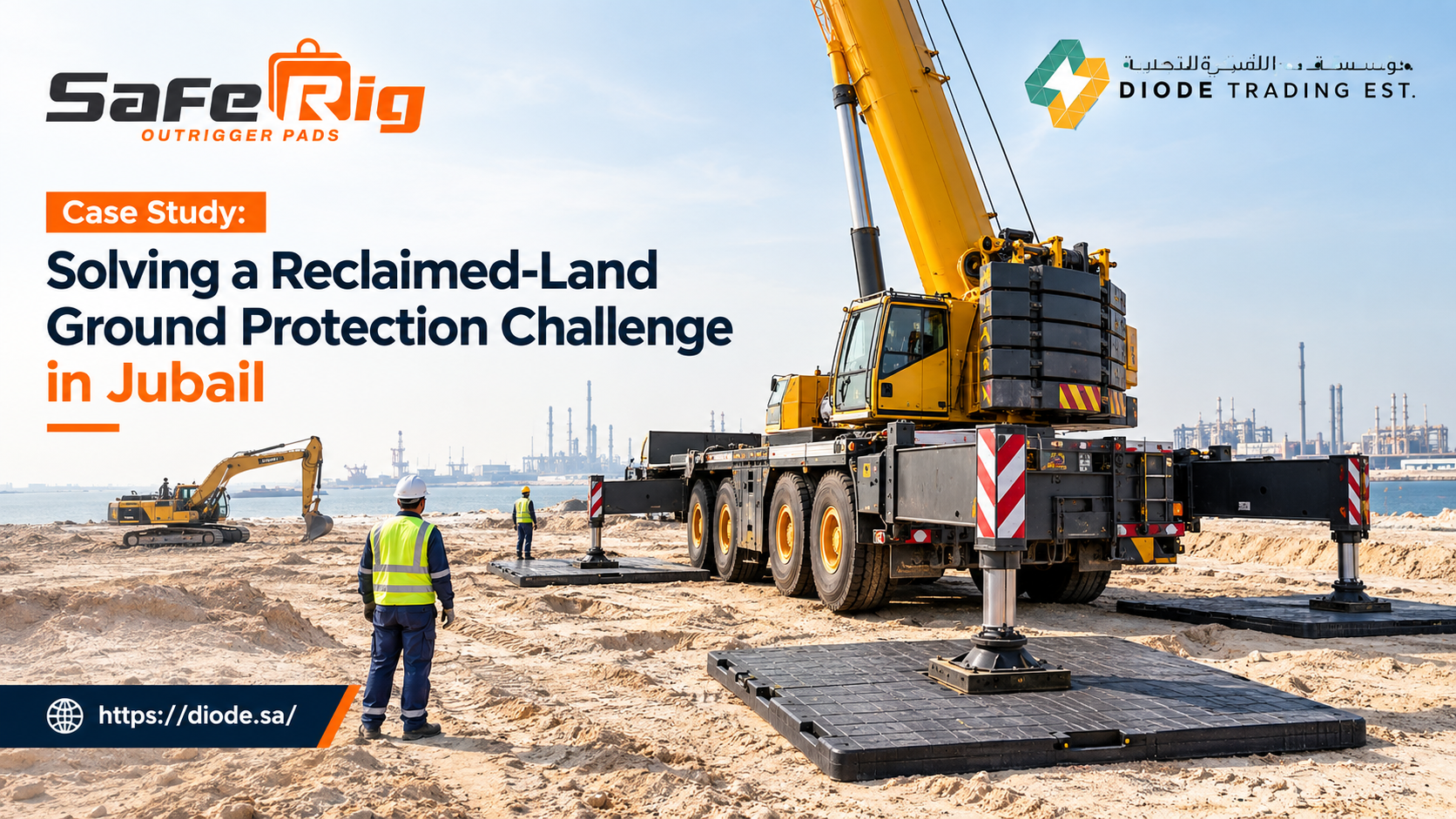
A mid-sized mechanical contractor working on a reclaimed-land site in Jubail Industrial City ran into a familiar problem: their standard-size outrigger pads, which had worked fine on previous jobs, weren’t holding up on thisparticular site’s ground. It’s a reminder that a pad size that’s worked reliably for years elsewhere doesn’t automatically transfer to a different ground type.
The site sat on reclaimed land with visibly softer ground than the contractor’s usual project locations. On the first lift using their existing pad stock, the crew noticed early signs of settlement under one outrigger — enough to pause the lift and reassess before it became a safety issue.
After reviewing the crane’s load chart and the site’s ground conditions, the pads in use were undersized for reclaimed ground bearing capacity. Moving to a larger footprint — roughly 25% more surface area than their standard pad — brought the ground bearing pressure back within a safe range for the site.
The project continued without further ground-related delays. This is a common enough pattern on Jubail’s reclaimed-land sites that it’s worth checking your ground conditions against your standard pad size before the first lift, not after a warning sign appears.
Reclaimed land is built up from fill material — often dredged sand, crushed rock, or a mix of imported fill — rather than natural, consolidated soil. Even when it’s been compacted during construction, reclaimed ground typically has a lower safe bearing capacity than the natural ground nearby, and that capacity can vary significantly across a single site depending on fill depth, compaction quality, and how long the ground has had to settle. Jubail Industrial City has a significant footprint of reclaimed and man-made land, which is why ground bearing pressure checks matter more there than on a typical inland site.
Our Outrigger Pad Size Calculator lets you run this check before mobilizing equipment to site, using your crane’s outrigger load and the site’s ground bearing capacity to confirm the minimum safe pad footprint. For reclaimed-land and soft-ground sites across Jubail, Yanbu, and other coastal industrial zones, this five-minute check is far cheaper than a paused lift.
This wasn’t an isolated case. Contractors moving between inland and coastal reclaimed sites in the Eastern Province routinely carry a single “standard” pad size across every job — and it works, right up until it doesn’t. The fix here wasn’t a different product, just the right footprint for the actual ground conditions. Building a five-minute bearing-pressure check into the pre-lift routine for any reclaimed or unfamiliar site is a small process change that prevents exactly this kind of last-minute pause. Treating pad sizing as a site-specific calculation rather than a fixed default is the cheapest insurance available against a stopped lift.
For the complete square and round pad range, verified load capacity chart, and full technical documentation, see our Outrigger Pads Saudi Arabia page.
See our range of high-visibility safety mats and markers designed to reduce trip hazards across your site.
 06 October, 2026 | Admin
Water and wastewater treatment systems handle
Read more 06 October, 2026 | Admin
Automotive applications push materials throug
Read more 05 October, 2026 | Admin
Food and beverage processing equipment needs
Read more