
 12 September, 2026 |
  Admin
Admin
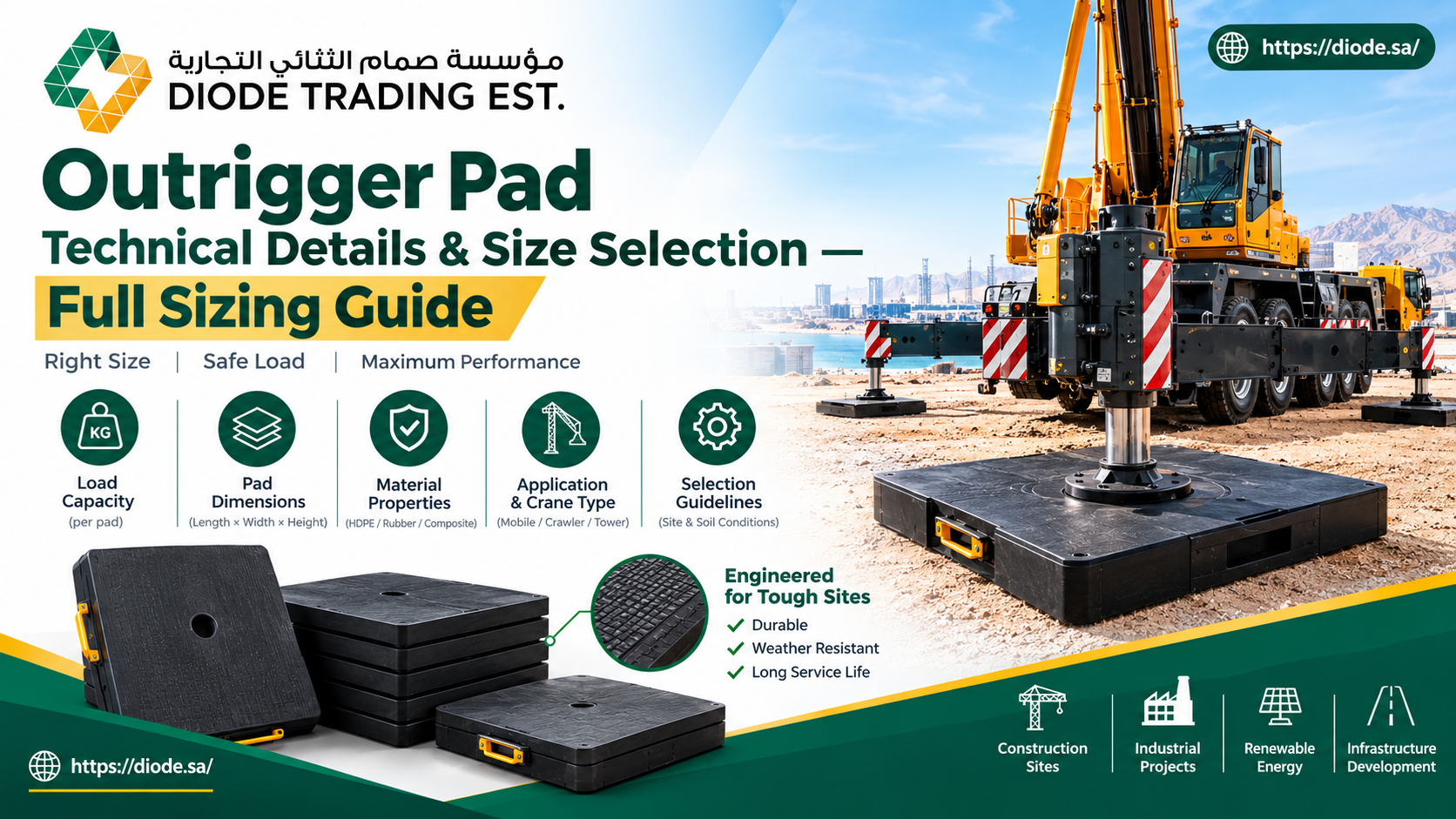
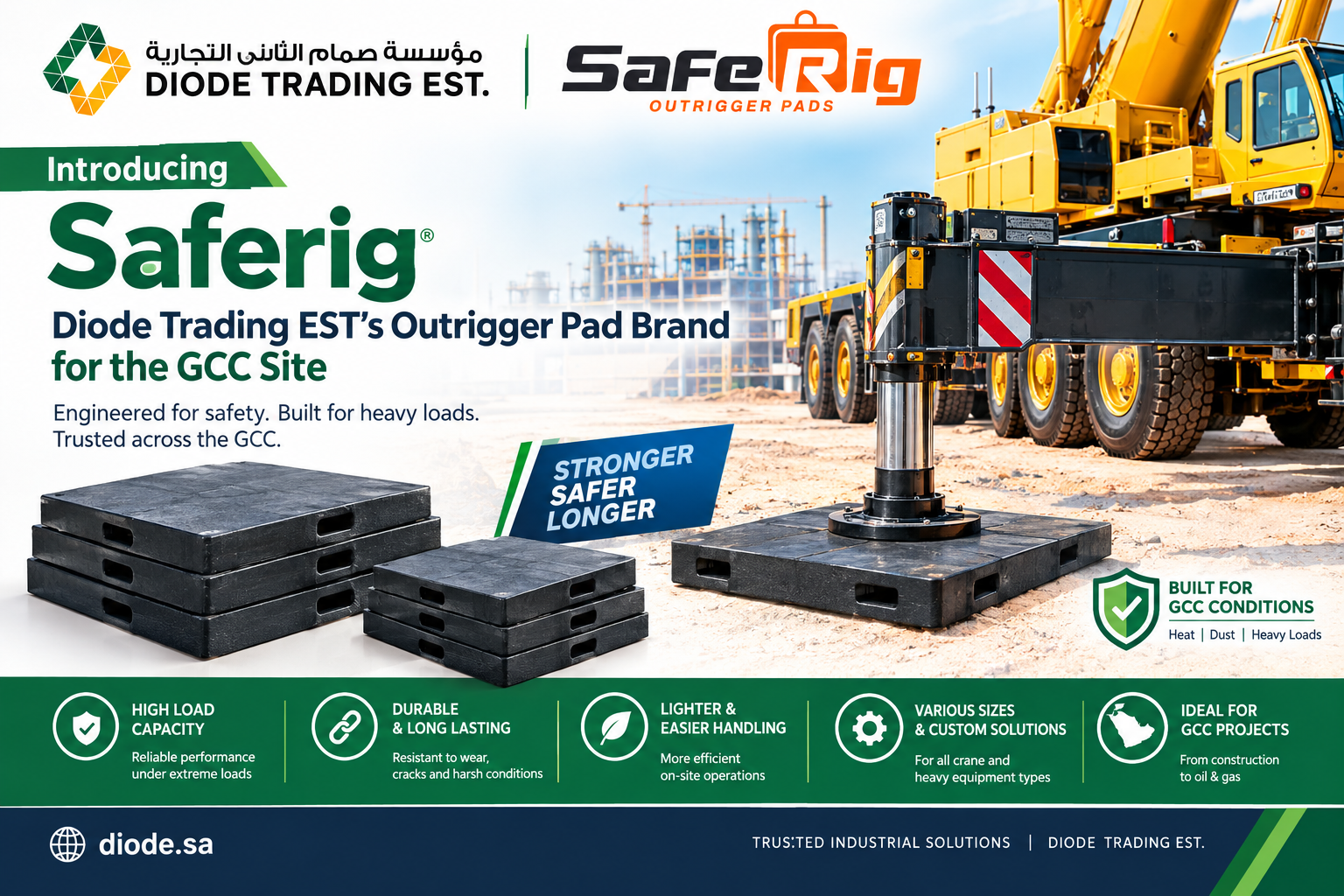
Introducing Saferig — Diode
Saferig is Diode Trading EST's outrigger pad
Read more
 04 July, 2025 | Admin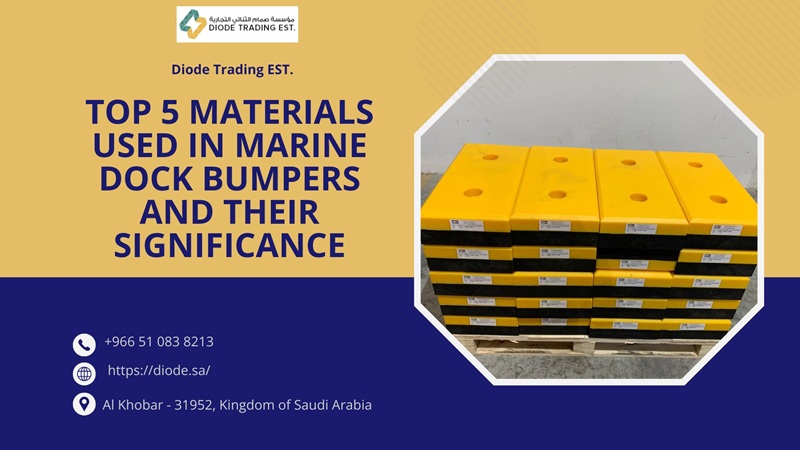
In the marine industry, safety, durability, and shock-absorbing capacity are vital aspects when it comes to protecting the vessels and docks during berthing. In such a situation, dock bumpers play a crucial role. Dock bumpers absorb the kinetic energy of boats and ships, preventing structural damage.
However, it is confirmed that not all of these units are made from the same materials. Polyethylene dock bumper manufacturers in Saudi Arabia use different material compositions in construction, which is vital for high performance and longevity. In this blog, we will discuss the top 5 materials that are useful for manufacturing these units.
Among the various types of marine bumper materials, we are now discussing the top 5 materials and their immense significance in marine dock bumpers.
Rubber is the most effective and popular material for manufacturing durable marine bumpers. Its flexibility and high impact resistance capacity make it ideal to absorb shock during vessel docking. In the ports and commercial docks, rubber units have enormous usefulness.
The immense significance of rubber bumpers in the marine industry is as follows-
Polyethylene, or PE, is famous for its high strength, weight-bearing capacity, non-marking surface, and impressive corrosion and chemical resistance. In the luxury marine environment, including floating docks and recreational boating docks, polyethylene dock bumpers play a significant role. The remarkable significance of using PE dock bumpers in Saudi Arabia is as follows-
Polyurethane offers a perfect balance between the flexibility of rubber and the hardness of plastics. This material is famous for its excellent shock absorption and wear resistance. In industrial marine docks, polyurethane bumpers have enormous significance. Let’s discuss them-
Composite materials are a unique combination of both rubber and polymer, famous for their high strength and durability. In the harsh marine environment, this type of composite unit has massive usefulness.
The immense significance of composite bumpers is as follows-
The last and most traditional material used in manufacturing dock bumpers is wood. In some conventional and low-impact docking areas, wooden units are available.
Beyond material selection, dock bumpers perform best when their size and placement follow recognized marine fender design guidance rather than guesswork. Organizations such as PIANC publish widely referenced guidelines covering berthing energy calculations, vessel displacement, and approach velocity, all of which influence how much energy a bumper needs to absorb safely. Matching the material choices discussed above to these engineering fundamentals, rather than relying on material type alone, helps ensure the finished installation protects both the vessel and the dock structure over its full service life.
The quality of dock bumper material depends on the marine application, and choosing correctly is one of the simplest ways to reduce long-term maintenance costs. Apart from the application, you must also verify its safety, longevity, and vessel protection for the marine environment. Contact Diode Trading EST for premium-quality dock bumpers for luxurious ports. We offer a range of dock bumpers to ensure the complete safety of your port or dock area.

See our range of high-visibility safety mats and markers designed to reduce trip hazards across your site.
 12 September, 2026 | Admin
Saferig is Diode Trading EST's outrigger pad
Read more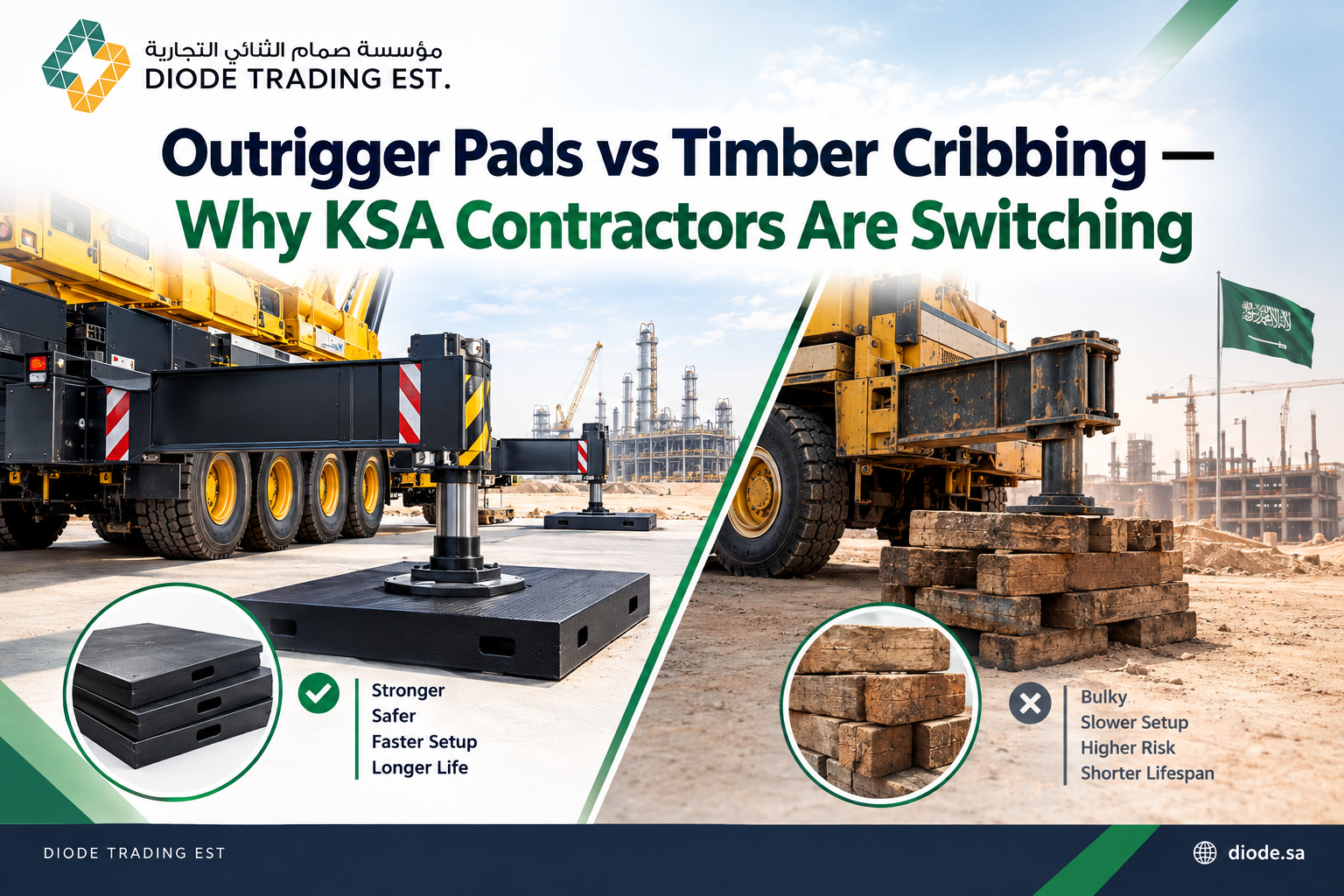 12 September, 2026 | Admin
Timber cribbing was the default for decades.
Read more