 05 October, 2026 |
  Admin
Admin
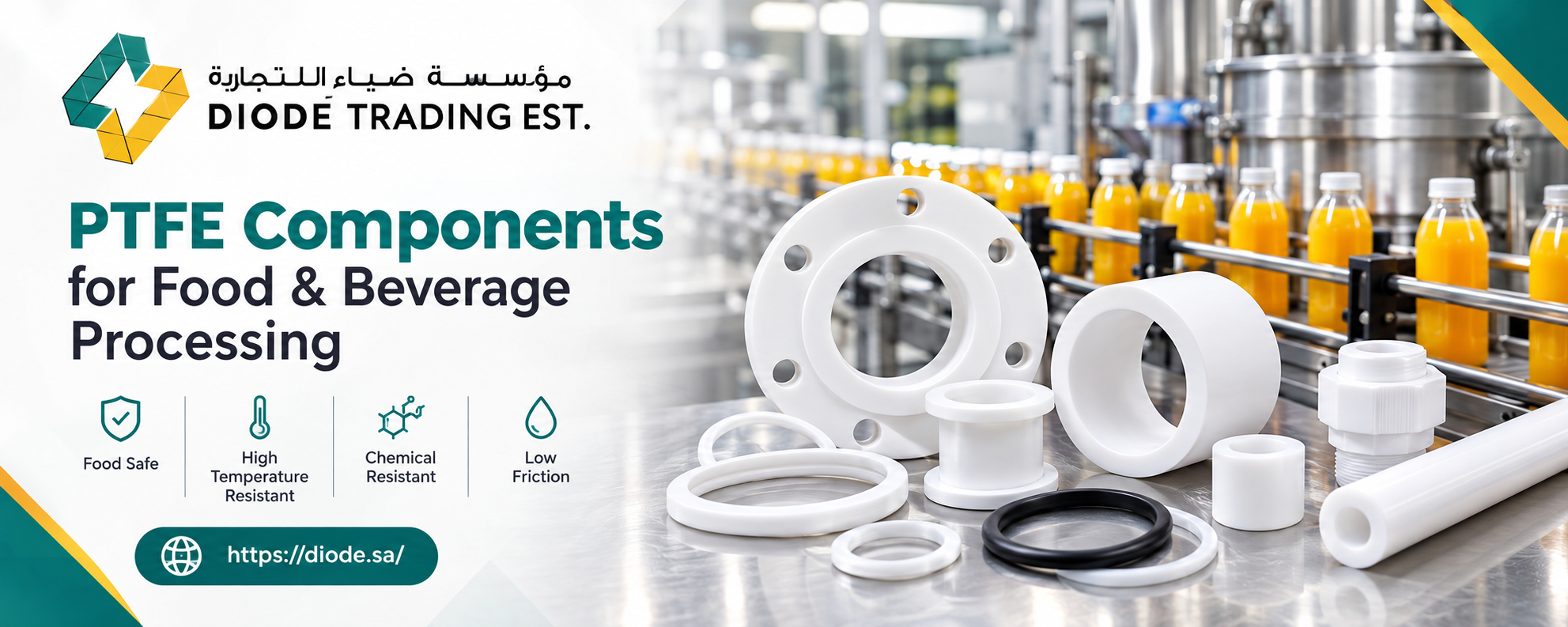
PTFE Components for Food &
Food and beverage processing equipment needs
Read more
Enquire Now
 01 October, 2026 | Admin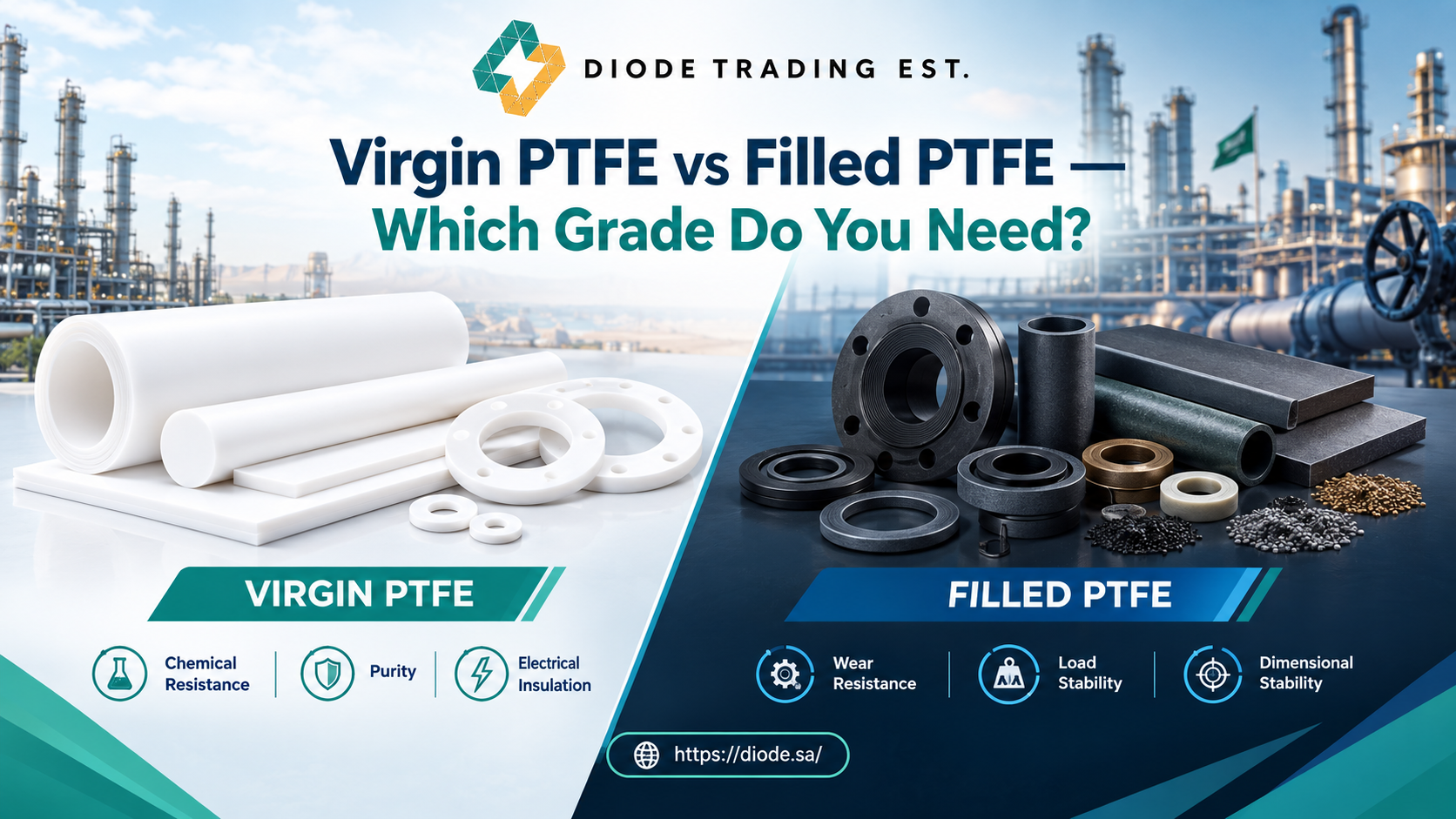
PTFE” isn’t a single specification – virgin (100% unfilled) PTFE and filled grades (with glass, carbon, graphite, or bronze) have meaningfully different mechanical properties, and choosing the wrong one for a load-bearing or wear application is a common, PTFE Gaskets Seals Supplier Saudi Arabia avoidable mistake.
| Property | Virgin PTFE | Glass-Filled (15%) | Carbon/ Graphite-Filled | Bronze-Filled |
| Chemical purity | Highest – pure PTFE | Slightly reduced | Slightly reduced | Reduced |
| Wear resistance | Fair | Good | Very good | Excellent |
| Property | Virgin PTFE | Glass-Filled (15%) | Carbon/ Graphite-Filled | Bronze-Filled |
| Compressive strength | Lower | Improved | Good | Highest |
| Friction coefficient | Very low | Low-moderate | Very low | Low |
| Typical use | Gaskets, seals, food/chemical purity-critical | Piston rings, bearings, wear parts | Valve seats, dynamic seals, bushings | Heavy-load bearings, highwear components |
Virgin PTFE offers the highest chemical purity and inertness of any grade, making it the default choice for food-grade, pharmaceutical, and high-purity chemical processing applications where any filler material could theoretically interact with the process. The tradeoff is lower wear resistance and compressive strength compared to filled grades – it’s not the best choice for continuous dynamic wear applications.
Adding glass fiber filler significantly improves compressive strength and wear resistance while retaining most of PTFE’s chemical resistance. Carbon Filled PTFE This is a common general-purpose upgrade from virgin PTFE for parts that see mechanical load, such as piston rings, seals, and bearing components.
Carbon and graphite fillers improve wear resistance and thermal conductivity while keeping friction very low, making these grades a common choice for valve seats and dynamic sealing components that need to slide repeatedly without excessive wear.
Bronze filler delivers the highest compressive strength and wear resistance of the common filled grades, at some cost to chemical resistance (bronze itself can corrode in certain chemical environments). This grade is typically reserved for heavy-load bearing and high-wear mechanical components rather than chemical-exposure applications.
1. Food-grade, pharmaceutical, or highest-purity chemical processing: Virgin PTFE.
2. General mechanical wear parts with moderate load: Glass-filled.
3. Dynamic seals and valve components needing low friction plus good wear resistance:
Carbon/graphite-filled.
4. Heavy-load bearings where chemical exposure isn’t the primary concern: Bronze-filled.
Food-grade suitability depends on the specific filler and certification of that grade - virgin PTFE is the more common default for food contact due to its purity, but certain filled grades are also food-grade certified. Confirm certification for your specific application before use.
See our range of high-visibility safety mats and markers designed to reduce trip hazards across your site.
 05 October, 2026 | Admin
Food and beverage processing equipment needs
Read more 05 October, 2026 | Admin
Pharmaceutical manufacturing environments dem
Read more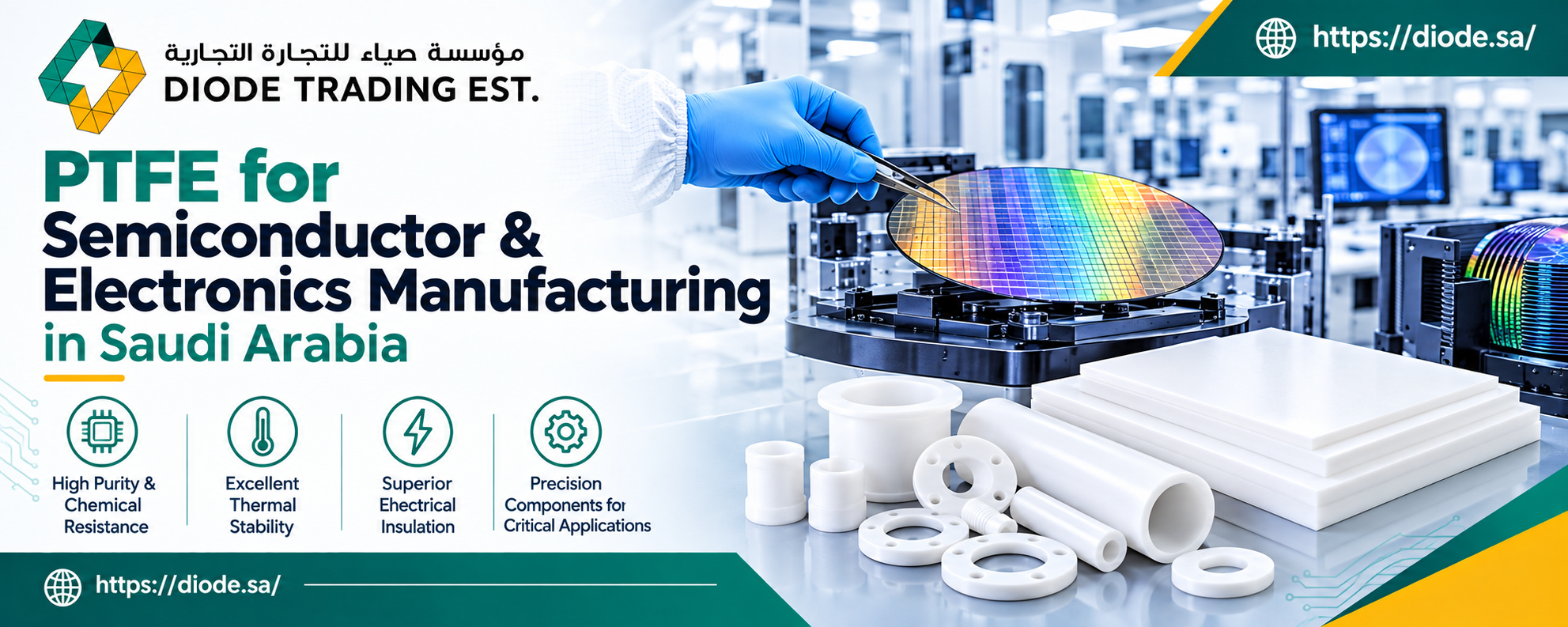 04 October, 2026 | Admin
Semiconductor and electronics manufacturing p
Read more