 05 October, 2026 |
  Admin
Admin
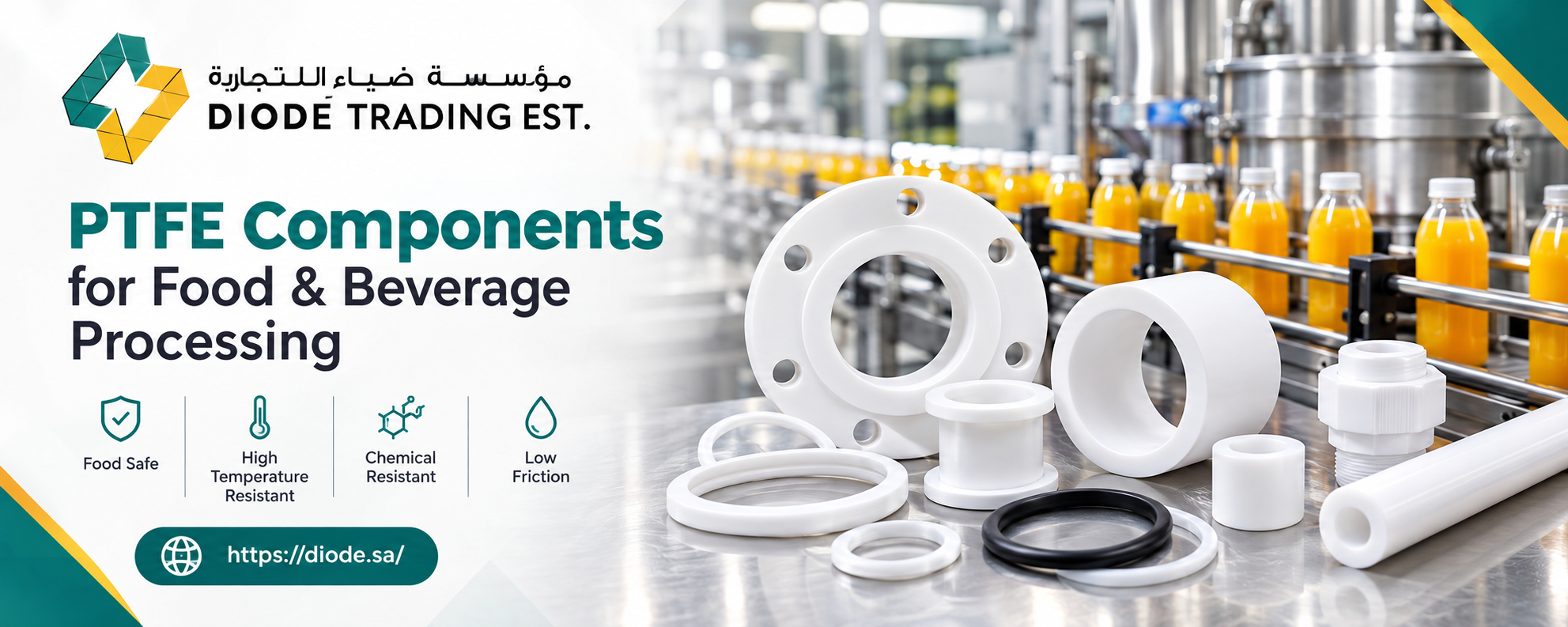
PTFE Components for Food &
Food and beverage processing equipment needs
Read more
Enquire Now
 30 September, 2026 | Admin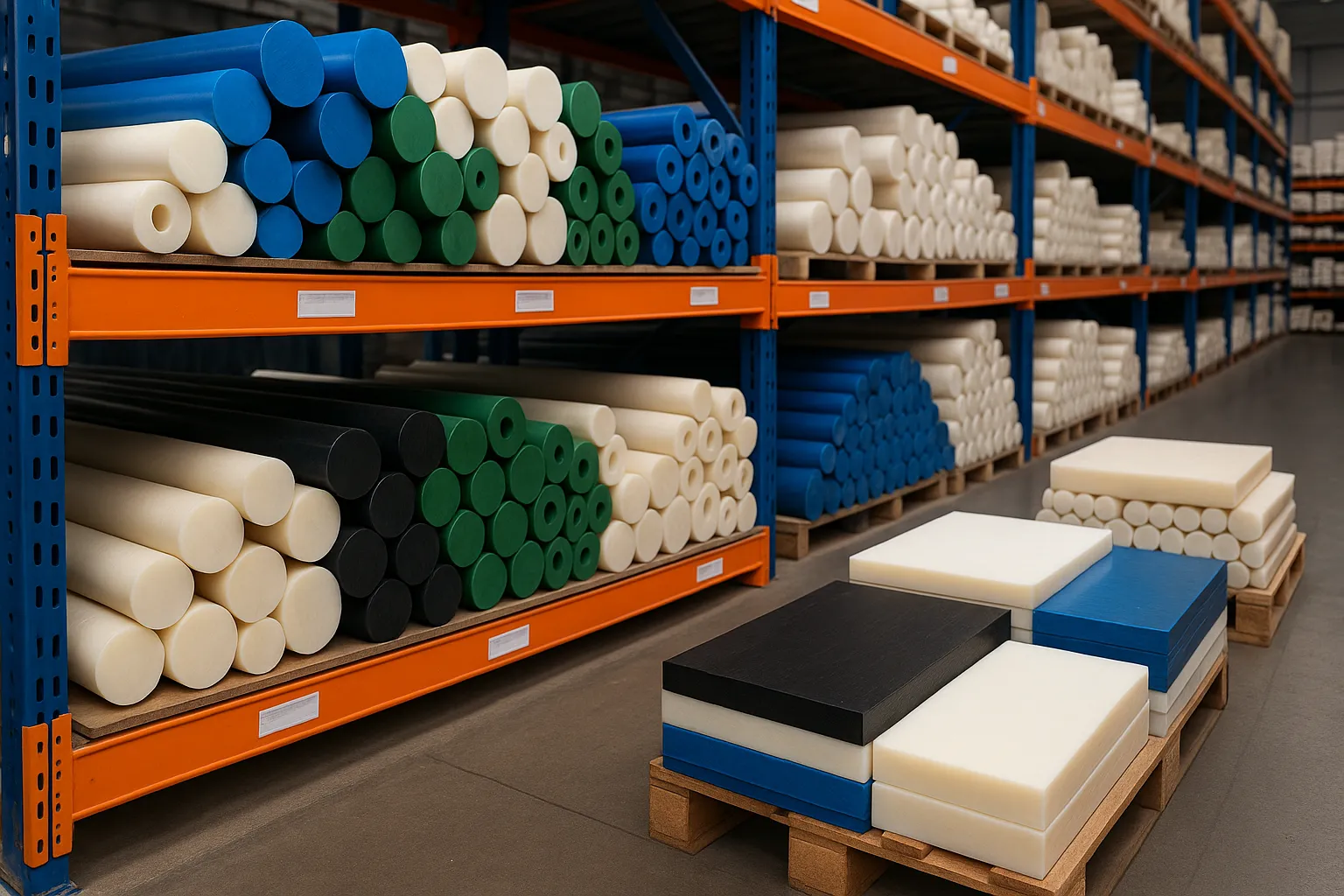
PTFE (Polytetrafluoroethylene) shows up in more places across Saudi Arabia’s industrial economy than almost any other single material — gasket faces, lined pipe, valve seats, electrical insulation, food processing equipment — because it does something very few materials can: resist nearly every chemical a plant will throw at it, across an enormous temperature range, without breaking down. This guide covers everything you need to choose the right PTFE product, wherever in the Kingdom you’re buying.
Most plastics degrade when they meet aggressive chemicals — they swell, soften, or break down at a molecular level. PTFE’s chemical structure is close to inert, resisting nearly all industrial acids, solvents, and chemicals with only a small handful of exotic exceptions most plants will never encounter. It also performs across an unusually wide temperature range — roughly -200°C to +260°C for standard grades — without losing its properties, and it has one of the lowest coefficients of friction of any solid material.
| Form | What It’s For | Typical Use |
|---|---|---|
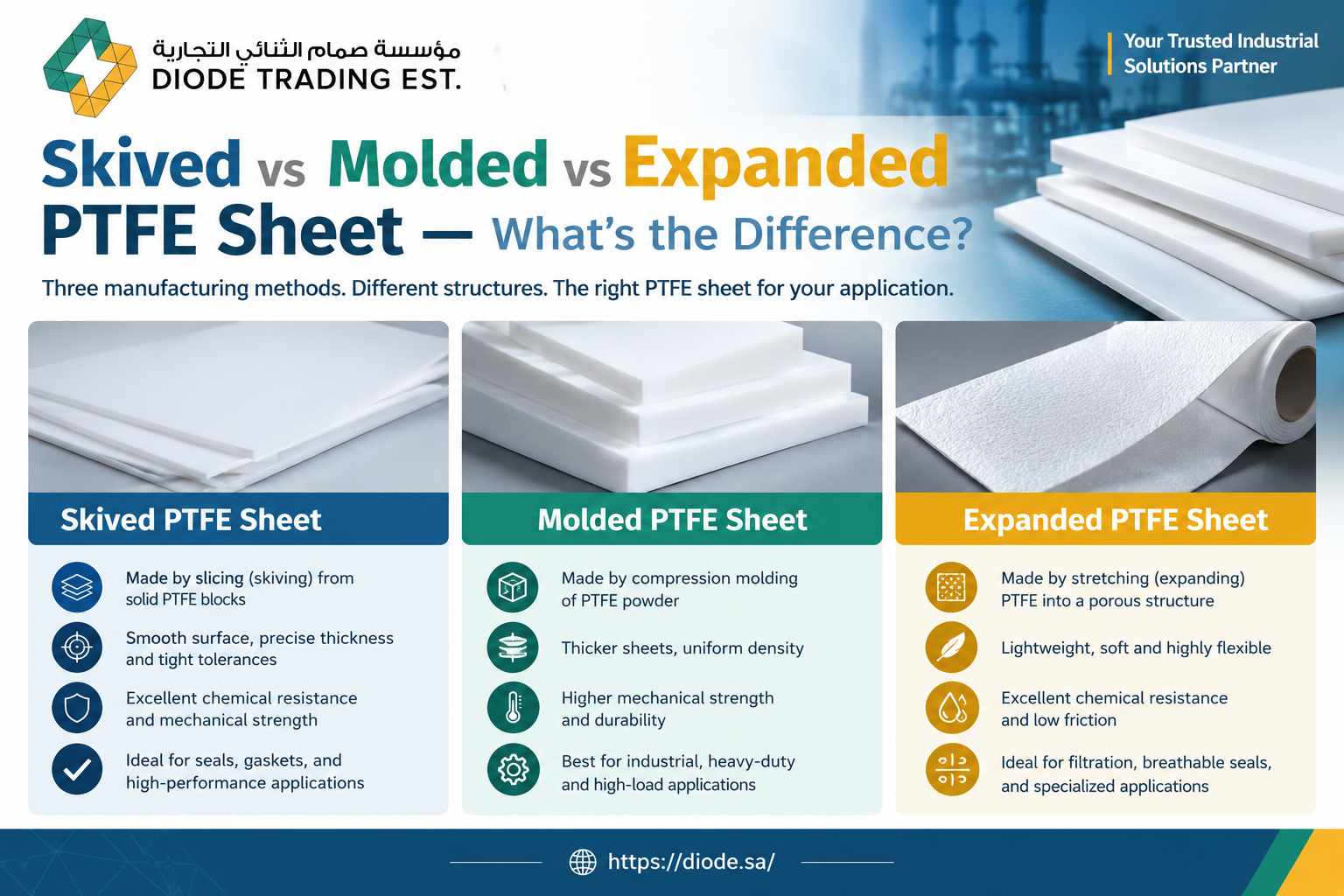
| Sheet | Gasket fabrication, cutting to custom shapes, lining flat surfaces | Flange gaskets, equipment lining, cut-to-size seals |
| Rod | Machined into custom parts – bushings, seals, valve components | CNC machining shops, custom mechanical parts |
| Tube/Pipe lining | Chemical transport where the fluid must not contact the pipe wall material | Chemical processing, corrosive fluid transport |
| Tape | Thread sealing, wrapping, low-friction surface application | Plumbing, pipe fitting, general sealing |
| Gaskets (ready-cut) | Pre-fabricated to standard flange dimensions | Fast replacement, standard piping systems |
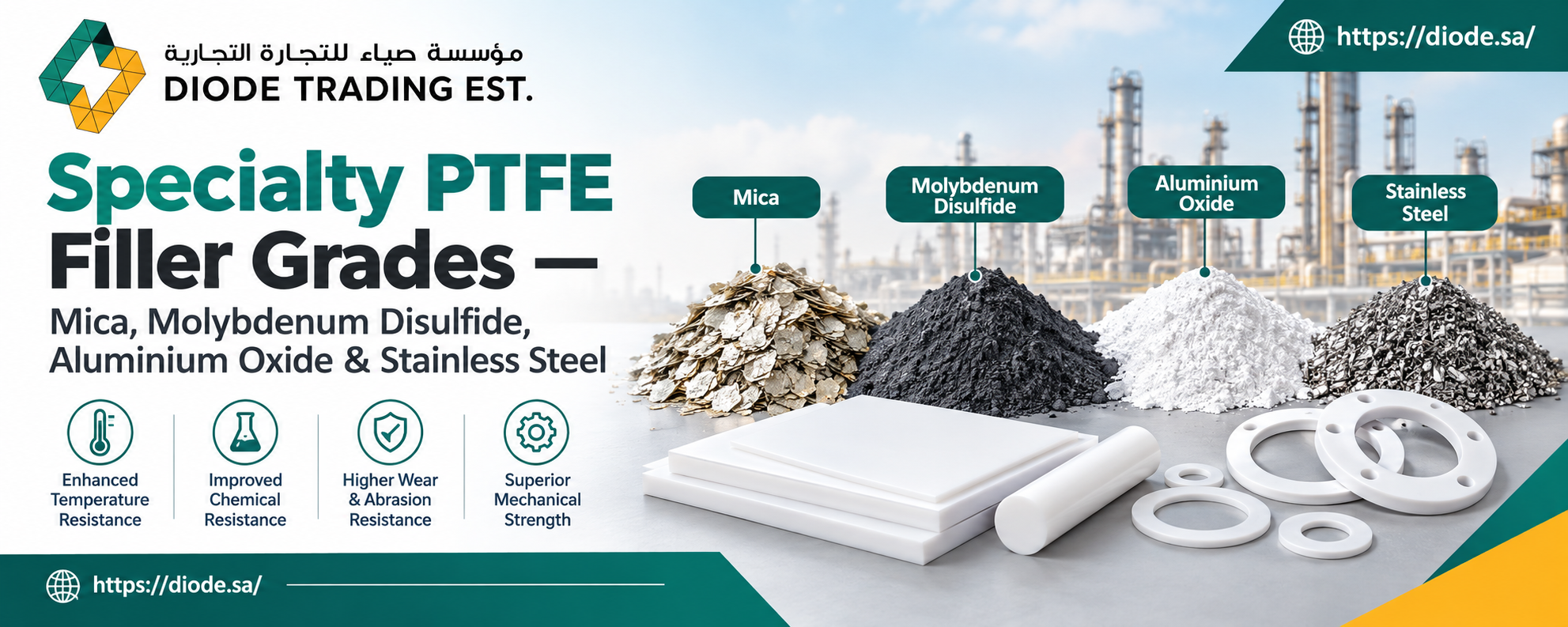
Not all PTFE is the same – virgin (unfilled) PTFE and filled PTFE (with glass, carbon, graphite, or bronze) behave differently under load, wear, and temperature. Virgin PTFE offers the best chemical purity and is the default for food-grade or highest-purity chemical applications. Filled grades trade a small amount of chemical inertness for significantly better mechanical strength, wear resistance, or thermal conductivity – see our full grade comparison guide for the complete breakdown.
PTFE demand isn’t concentrated in one region – it follows wherever chemical processing, oil & gas, or general industrial manufacturing operates, which in practice means it spans the whole Kingdom.
| Region | Primary Industry Driver | Typical PTFE Demand |
|---|---|---|
| Jubail / Yanbu | Petrochemical, refining | Gasket sheet, lined pipe, valve seat components for large-scale chemical plants |
| Dammam / Khobar / Dhahran | Oil & gas, general industrial | General PTFE stock, gaskets, seals for the Eastern Province industrial base |
| Riyadh | General manufacturing, construction, Vision 2030 projects | Broader industrial and construction-adjacent PTFE demand |
| Jeddah | Port/logistics, general industry, food processing | Food-grade PTFE, general industrial gaskets and seals |
Is PTFE the same as Teflon?
Yes – Teflon is a brand name (originally DuPont’s) for PTFE. The material itself, Polytetrafluoroethylene, is the same regardless of which name is used.
What temperature range can PTFE handle?
Standard PTFE typically performs reliably from around -200°C up to roughly 260°C continuous service, though exact limits depend on the specific grade and application.
Does Diode Trading EST supply PTFE across all of Saudi Arabia, or just the Eastern Province?
Delivery is available across the Kingdom – Eastern Province, Riyadh, Jeddah, and other regions – from our Al Khobar base.
See our range of high-visibility safety mats and markers designed to reduce trip hazards across your site.
 05 October, 2026 | Admin
Food and beverage processing equipment needs
Read more 05 October, 2026 | Admin
Pharmaceutical manufacturing environments dem
Read more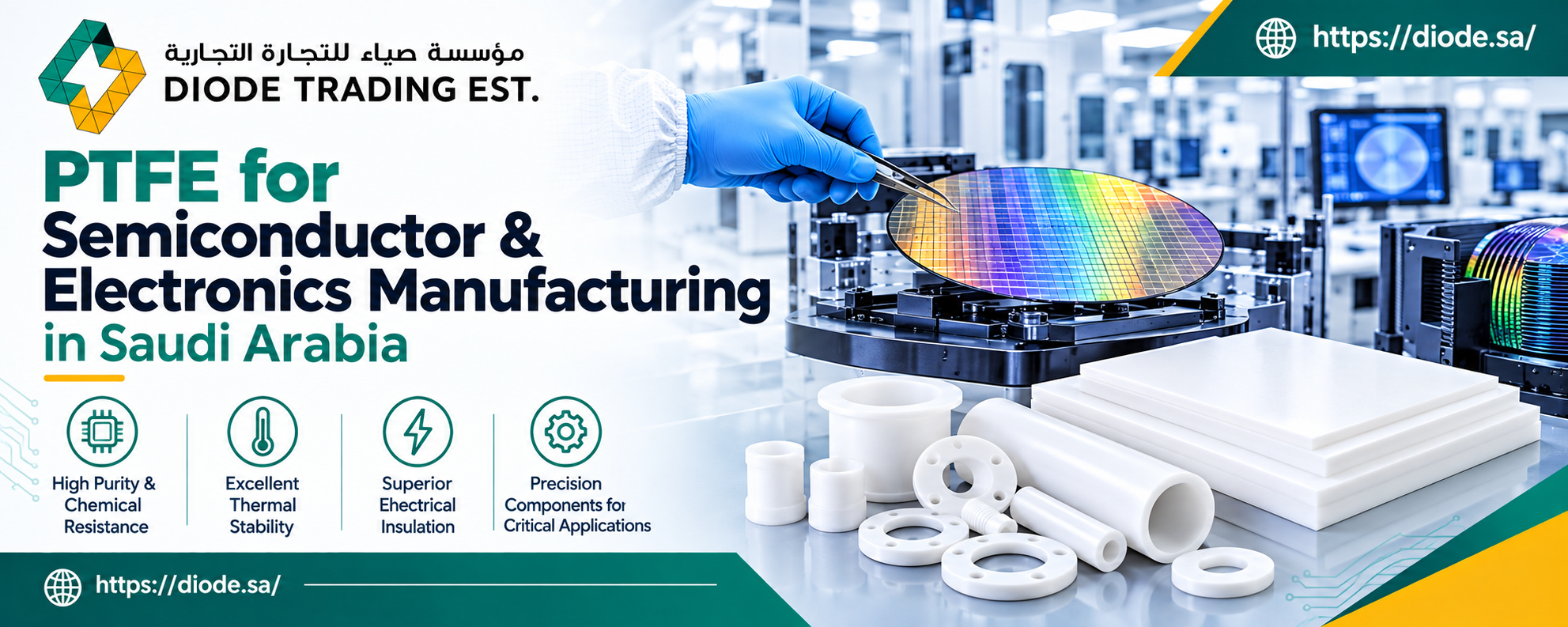 04 October, 2026 | Admin
Semiconductor and electronics manufacturing p
Read more