 09 September, 2026 |
  Admin
Admin
Outrigger Pads for Grove (Mani
Grove cranes, manufactured by Manitowoc, are
Read more
 06 September, 2026 | Admin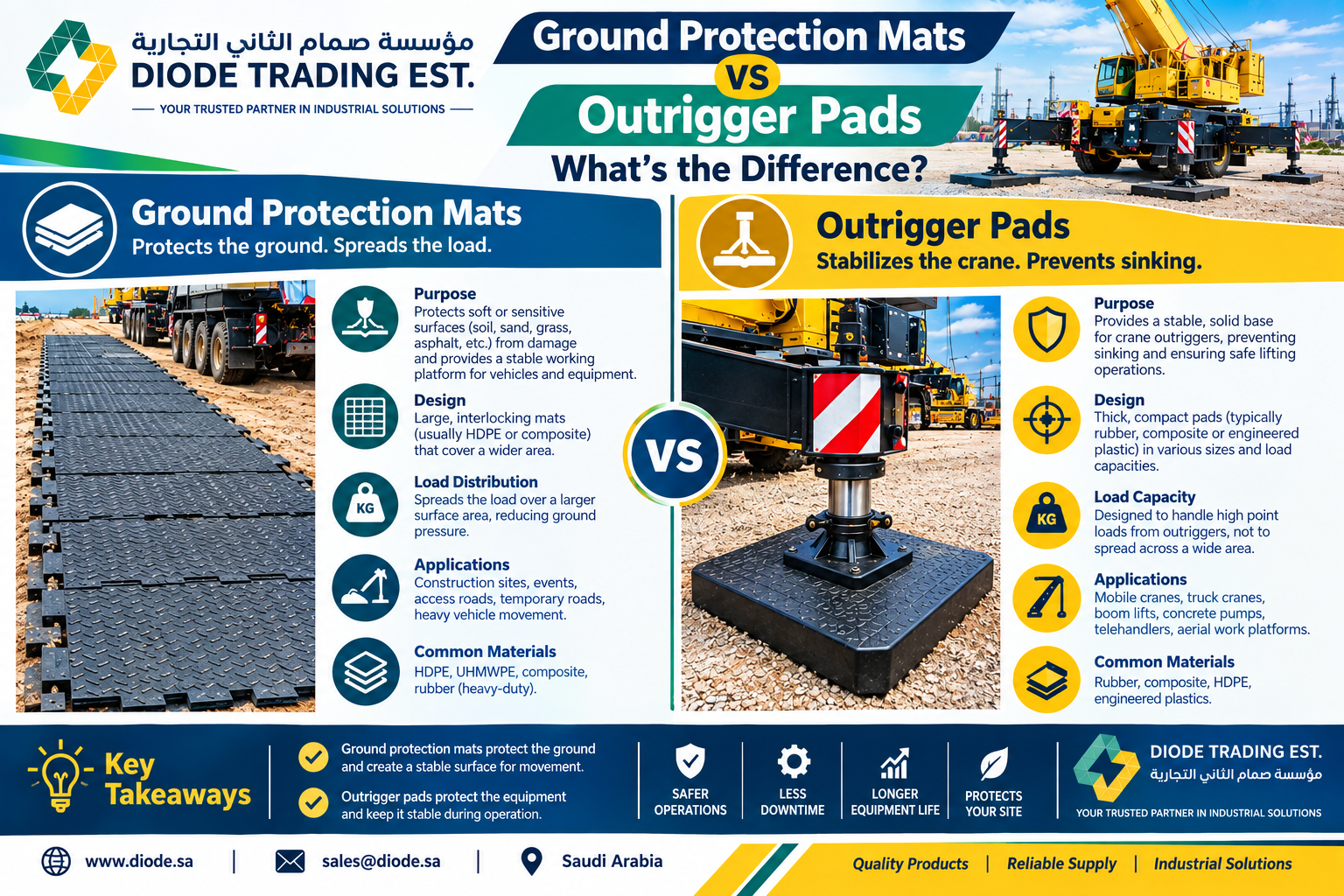
Ground protection mats vs outrigger pads is a comparison that trips up a lot of site planners, because both products spread load over soft ground but they solve completely different problems. Outrigger pads sit under a single point load, while ground protection mats cover a continuous area for vehicle access or laydown yards.
• Single crane or lift outrigger → outrigger pad
• Vehicle access road → ground protection mats
• Crawler crane tracking → interlocking mats
• Equipment laydown on soft ground → ground protection mats
Choosing the wrong product usually shows up fast. An outrigger pad used as a roadway will crack or shift under repeated vehicle traffic because it’s designed for a static point load, not rolling wheel loads. Ground protection mats used under an outrigger, on the other hand, can flex or bow under the concentrated reaction force of a crane’s outrigger float, since they’re built to spread load across a wide, distributed area rather than resist a single high-pressure point.
Ground protection mats are typically laid edge-to-edge, sometimes interlocking, to create a temporary roadway, crane track, or laydown surface across grass, sand, or soft soil. They protect the ground underneath from rutting and protect vehicles or tracked equipment from getting stuck, and they’re commonly used for event grounds, utility access roads, and construction site perimeters across Saudi Arabia.
Outrigger pads sit directly under a crane or aerial lift’s outrigger float and spread that single concentrated reaction load across a larger footprint, reducing the ground bearing pressure to a safe level. Sizing depends on the crane’s load chart and the ground’s bearing capacity, which is why we recommend checking the specific model and site conditions before choosing a pad size.
Occasionally, on light-duty applications, but we don’t recommend it as a default. If a site has both needs — say, a crane lift plus a vehicle access route across soft ground — the correct approach is usually to plan for both products for their intended purpose rather than trying to make one product do both jobs.
Most ground protection mats and outrigger pads used across Saudi Arabia’s construction, marine, and event sites are made from UHMWPE (Ultra-High Molecular Weight Polyethylene), valued for being lightweight relative to steel, resistant to chemicals and weathering, and easy to handle by hand or with basic lifting gear. The main difference between the two product lines isn’t usually the raw material but the shape, thickness, and surface design — mats are typically thinner, larger-format panels meant to be walked or driven over, while outrigger pads are thicker, smaller-footprint blocks meant to sit under a concentrated load.
Because ground protection mats and outrigger pads serve such different purposes, it’s worth confirming both product types are in scope before a project starts rather than discovering a gap once equipment is already mobilized on site. Diode Trading EST stocks both product lines in Saudi Arabia, so contractors managing a mixed scope — crane lifts plus vehicle access, for example — can source everything from a single supplier instead of coordinating two separate vendors.
If you’re not sure whether your project needs outrigger pads, ground protection mats, or both, share your site plan and equipment list with our team. We supply both product lines in Saudi Arabia with documented load ratings and can help you avoid ordering the wrong product for the job, whether that’s a single crane mobilization for a day or a multi-week site setup involving both continuous access routes and repeated lifts.
See our range of high-visibility safety mats and markers designed to reduce trip hazards across your site.
 09 September, 2026 | Admin
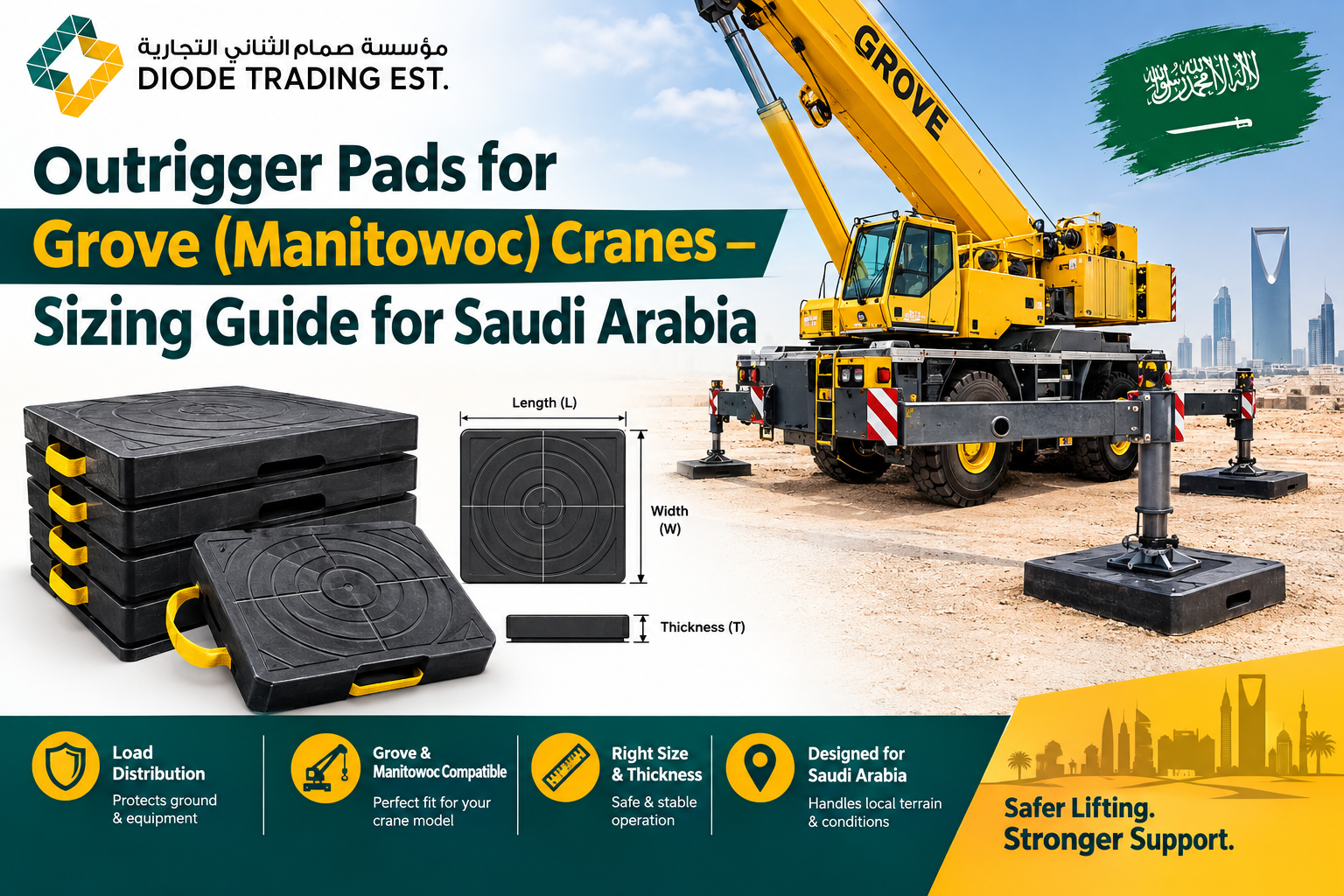
Grove cranes, manufactured by Manitowoc, are
Read more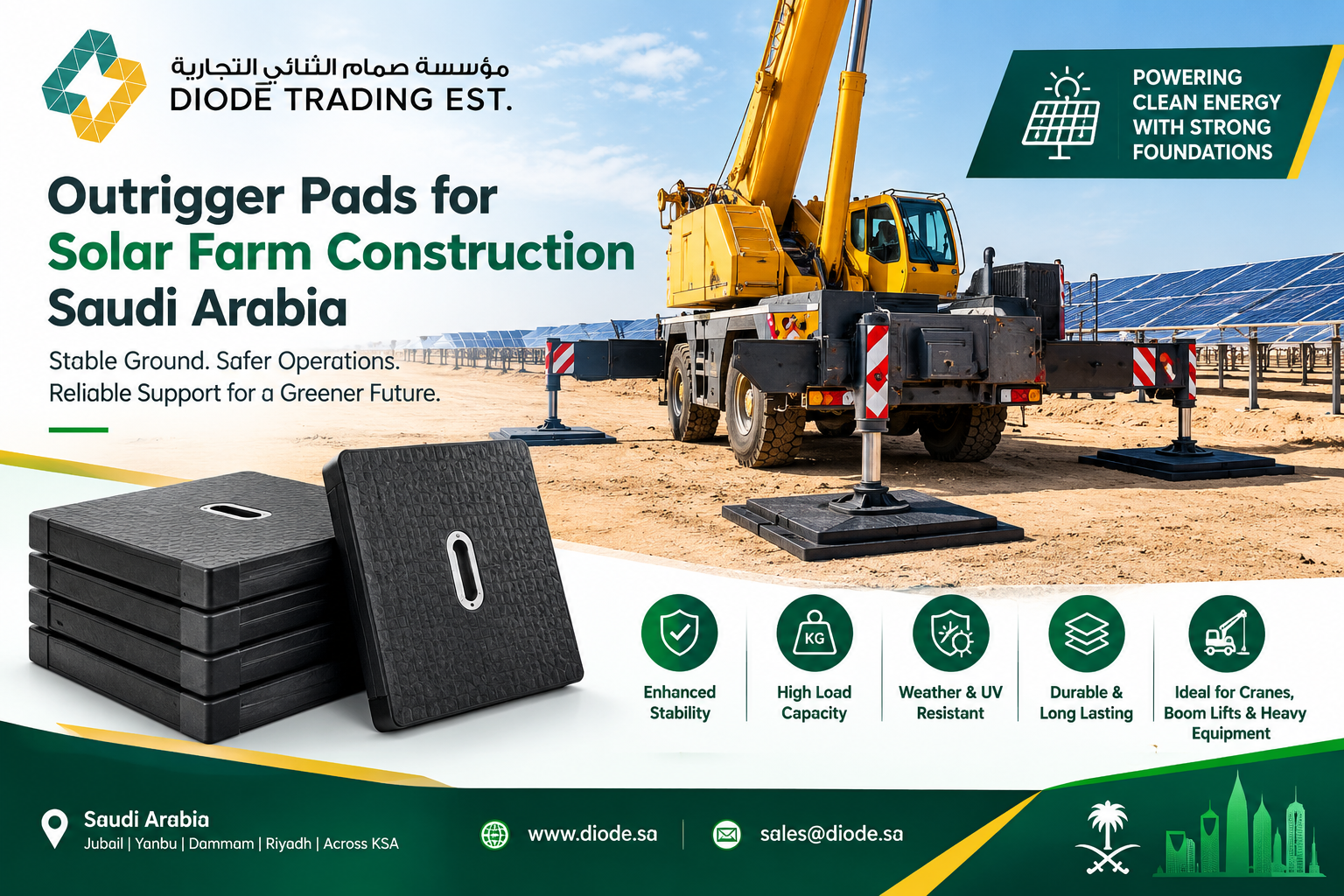 09 September, 2026 | Admin
Saudi Arabia's solar buildout involves cranes
Read more 08 September, 2026 | AdminPort operators, infrastructure contractors, a
Read more