 09 September, 2026 |
  Admin
Admin
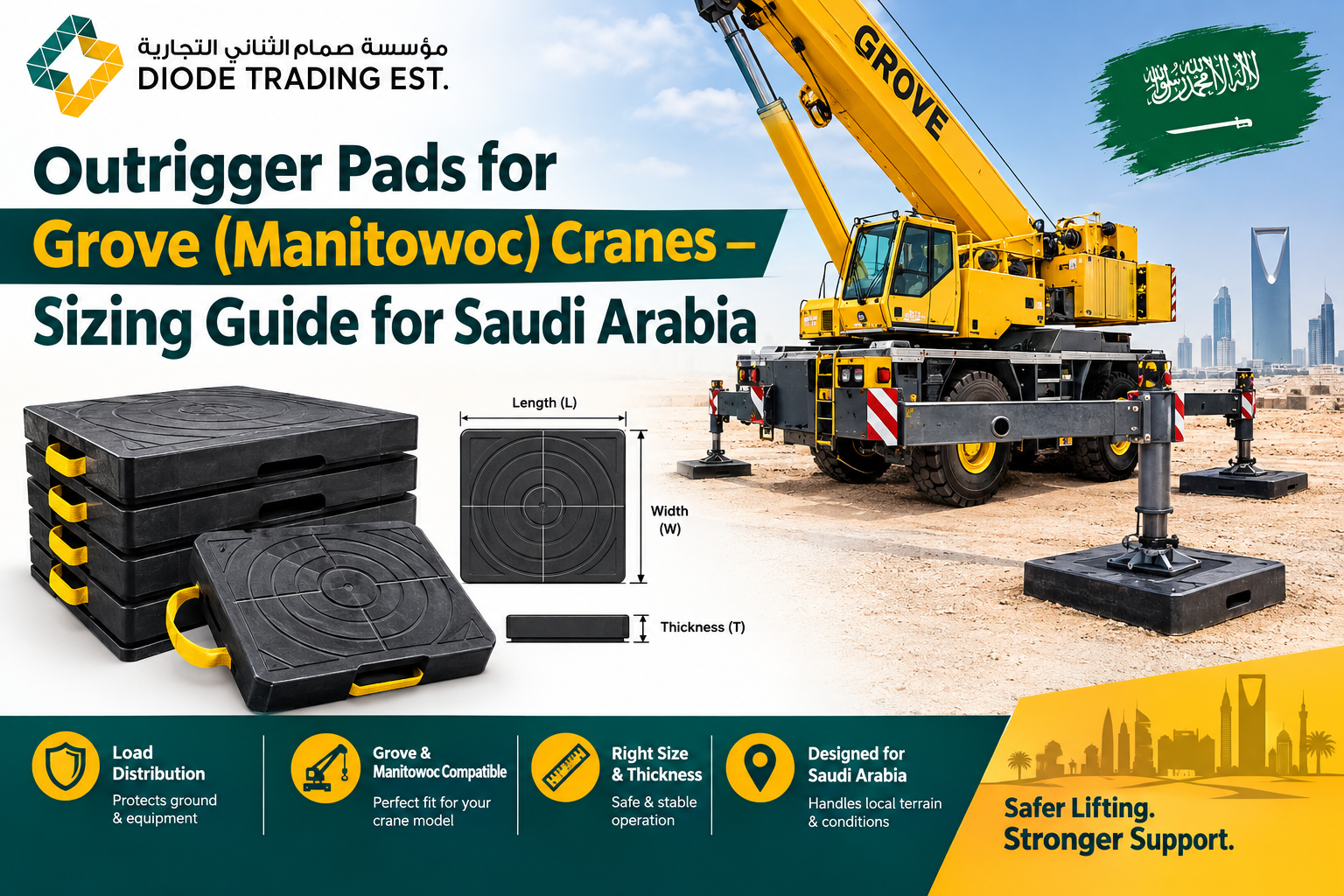
Outrigger Pads for Grove (Mani
Grove cranes, manufactured by Manitowoc, are
Read more
 05 September, 2026 | Admin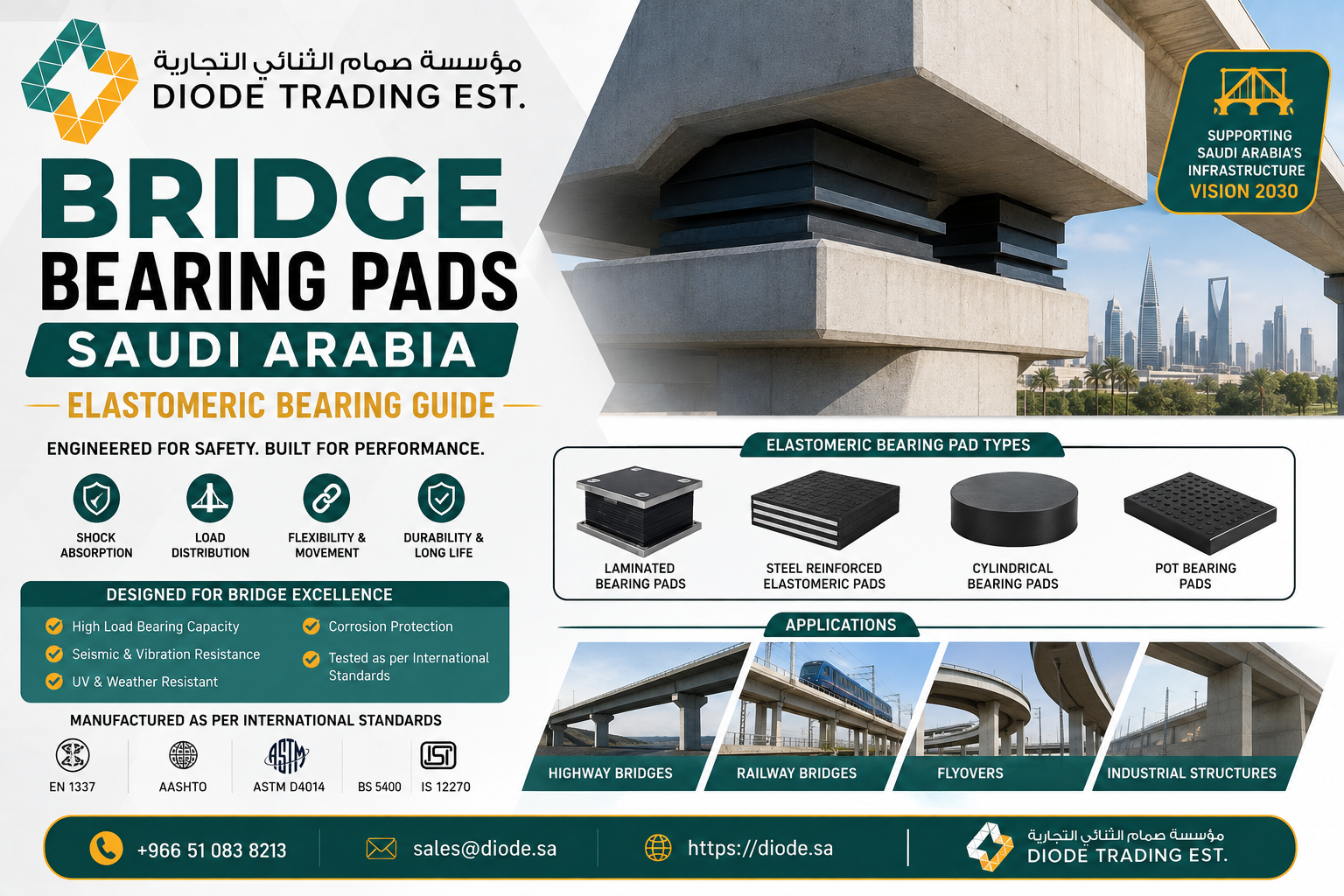
Bridge bearing pads Saudi Arabia projects rely on sit between a bridge’s deck and its supporting piers or abutments, letting the deck expand, contract, and rotate slightly without transferring that movement into cracks in the concrete below. Every bridge needs somewhere for the deck to move without cracking the supports underneath it, and elastomeric bearing pads are usually that somewhere.
Steel-laminated bearings alternate steel plates with rubber layers — steel resists sideways bulge while rubber provides flex and rotation capacity. This layered construction lets the bearing carry heavy vertical loads from the bridge deck while still allowing the small horizontal and rotational movements that happen constantly from traffic loading, temperature swings, and long-term settlement.
Saudi Arabia’s bridge and overpass projects see some of the widest daily and seasonal temperature swings anywhere, which means bridge decks expand and contract more than they would in milder climates. Elastomeric bearing pads absorb that movement continuously, over decades of service, without needing the ongoing maintenance that older mechanical bearing types required. For bridge bearing pads Saudi Arabia contractors specify, getting the pad specification wrong — the wrong size, hardness, or load rating — can shorten the working life of the whole structure, not just the bearing itself.
Bearing pad selection comes down to a handful of engineering inputs: the vertical load the bearing needs to carry, the expected horizontal movement and rotation at that support point, and the ambient temperature range on site. Most Saudi bridge and overpass projects specify pads to a recognized design standard, and the pad supplier should be able to provide test certificates confirming the rubber compound and steel reinforcement meet that specification before installation.
Bearing pads need a flat, level bearing surface on both the pier cap and the underside of the deck to perform correctly — uneven bearing surfaces concentrate load on one edge of the pad rather than spreading it evenly, which accelerates wear. Periodic visual inspection for bulging, cracking, or uneven compression is good practice on any bridge using elastomeric bearings, particularly a few years after opening once the structure has gone through a few full seasonal cycles.
Bridge bearing pad footprints on typical Saudi road and highway projects range from smaller pads for pedestrian bridges and minor overpasses up to large-format pads under major highway interchange spans, with load capacities scaled to match. Because every bridge design is different, we recommend confirming pad dimensions against the structural engineer’s bearing schedule rather than assuming a standard size will fit, especially on retrofit or widening projects where existing pier caps constrain the available footprint.
Bearing pad replacement on an existing bridge is a more involved job than new installation, since the deck typically needs to be jacked up slightly to relieve load on the old bearing before it can be removed. This is usually planned as a maintenance project with lane closures and temporary jacking supports, and the replacement pad needs to match the original design’s load and movement capacity unless the structural engineer has specified an updated bearing schedule as part of the works.
Diode Trading EST supplies elastomeric and steel-laminated bridge bearing pads for infrastructure projects across Saudi Arabia, with documented load ratings and material certification. Share your project’s span, load, and movement requirements with our team and we’ll confirm the right bearing pad specification before installation begins, whether that’s a new build, a widening project, or a bearing replacement on an existing structure.
See our range of high-visibility safety mats and markers designed to reduce trip hazards across your site.
 09 September, 2026 | Admin
Grove cranes, manufactured by Manitowoc, are
Read more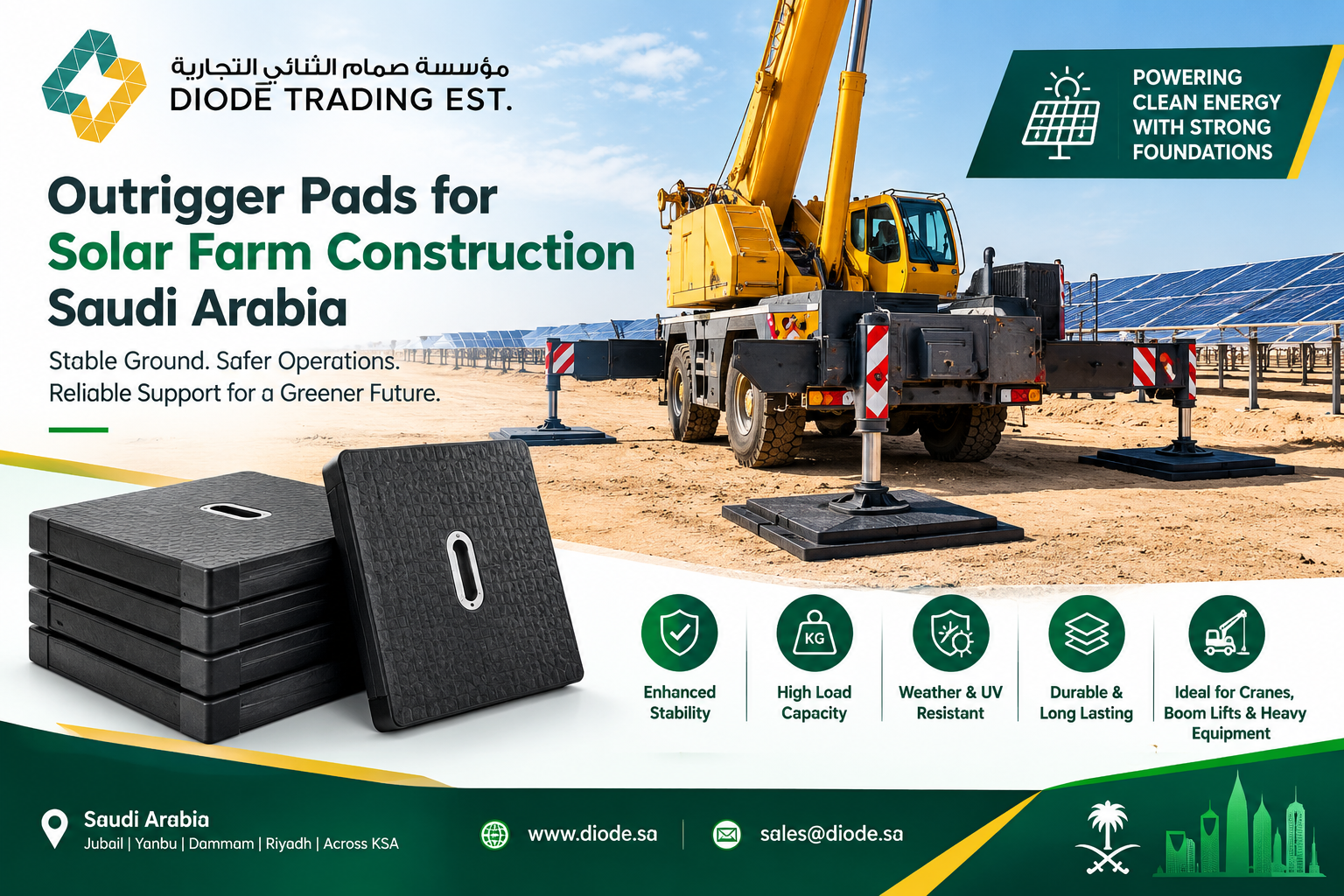 09 September, 2026 | Admin
Saudi Arabia's solar buildout involves cranes
Read more 08 September, 2026 | AdminPort operators, infrastructure contractors, a
Read more