 14 September, 2026 |
  Admin
Admin
What to Look for in an Outrigg
Most Read more

 12 September, 2026 | Admin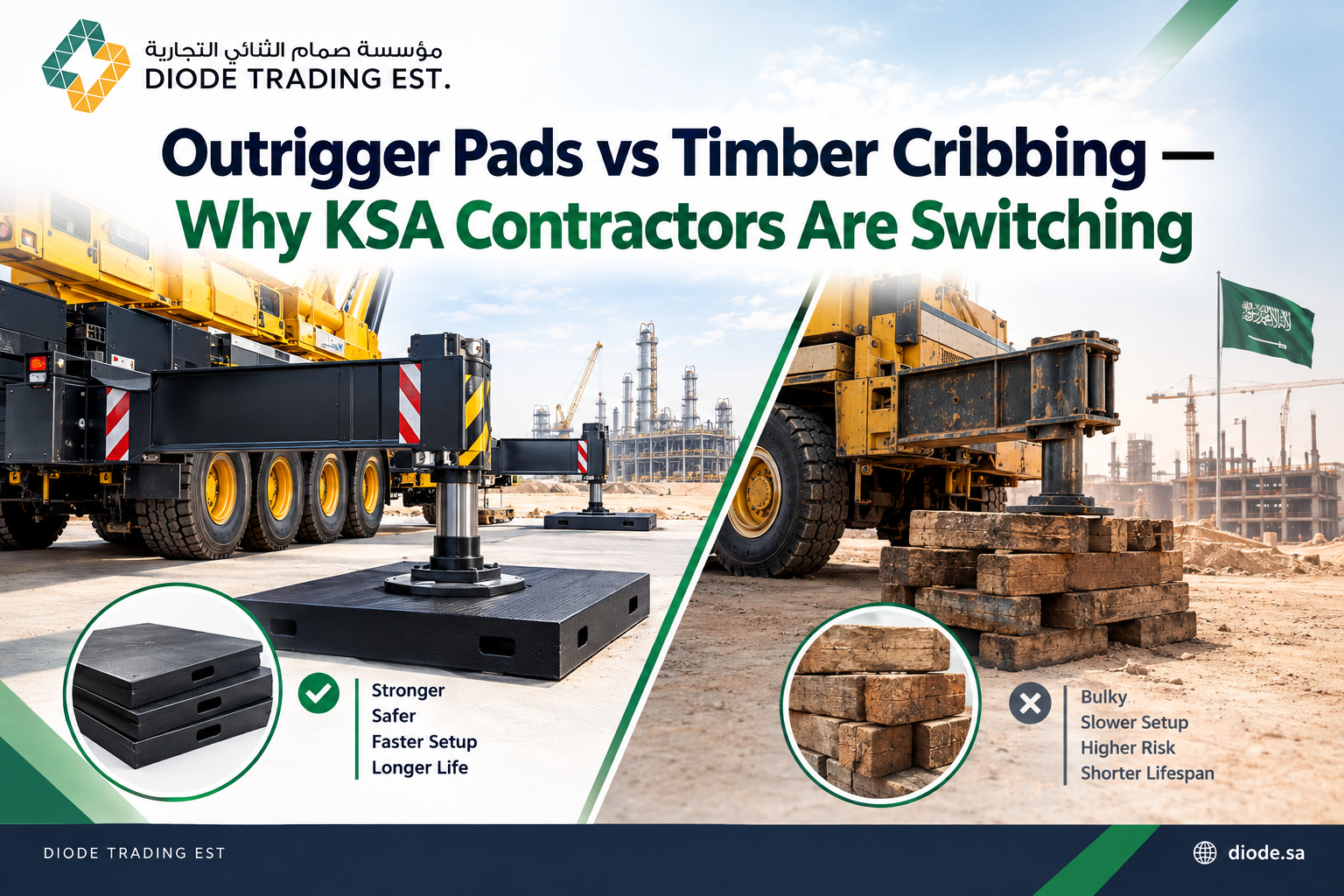
Timber cribbing was the default for decades. But if you’ve watched wooden blocks split after a season in the
sun, Outrigger Pad Size Calculator you’ll understand why so many KSA contractors have quietly switched to UHMWPE pads instead.
| Timber Cribbing | UHMWPE Pads | |
| Setup time | Slower — stacking | Fast — single-piece |
| Heat/sun durability | Splits over time | Stable across KSA range |
| Weight | Heavy, awkward | Lighter, easier to move |
| Reusability | Degrades with use | Long service life |
Beyond setup time and durability, the switch also affects site logistics: a single UHMWPE pad can be repositioned by hand or with light equipment, while timber cribbing usually needs to be rebuilt block by block at every new location. For contractors moving cranes or heavy machinery between multiple points on a Saudi site in a single day, that difference in handling time adds up quickly across a project.
Few contractors replace their entire timber cribbing inventory at once. More often, the switch to UHMWPE pads happens gradually as older timber blocks reach the end of their service life and get replaced with pads on the next project, rather than as a single fleet-wide decision. This makes it easier to trial UHMWPE pads on one or two sites before committing to a larger changeover.
Timber cribbing often looks cheaper on a per-unit basis, but the comparison changes once labor time, replacement frequency, and storage space are factored in. A crew that spends extra time stacking and unstacking timber blocks at every outrigger position, project after project, is spending labor hours that a single-piece pad avoids. Over several projects, this labor difference can outweigh the higher upfront cost of a UHMWPE pad.
Timber cribbing has not disappeared entirely from Saudi sites. For very short, one-off jobs where a pad will not be reused, or where timber is already on hand from another part of a project, cribbing can still be the practical choice. The switch to UHMWPE tends to make the most sense for contractors doing repeat lifts across multiple projects, where the pads are reused many times over their service life.
If you are considering making the switch, the first step is confirming the outrigger reaction loads for the specific crane models your fleet uses most often, since this determines the pad thickness and footprint you will need. Our team can help match pad sizing to your equipment list before you commit to a first order.
Timber cribbing blocks are typically moved and stacked individually, which means a crew needs enough hands on site to build and dismantle a crib at every outrigger position. A single UHMWPE pad, by contrast, can usually be moved into place by one or two people using a pallet jack or the crane’s own auxiliary line, cutting the setup crew needed at each position.
Transport between sites is also simpler with UHMWPE pads, since a stack of pads takes up a predictable, flat footprint on a flatbed, whereas loose timber blocks are more awkward to secure and can shift during transport if not carefully restrained.
For contractors weighing the switch, it is worth requesting a side-by-side quote covering both purchase price and expected crew hours per lift, rather than comparing timber and UHMWPE on purchase price alone.
Our team can put together this kind of comparison for your specific fleet and typical lift frequency on request.
Reach out with your crane list and typical monthly lift count to get started.
See our range of high-visibility safety mats and markers designed to reduce trip hazards across your site.

 12 September, 2026 | Admin
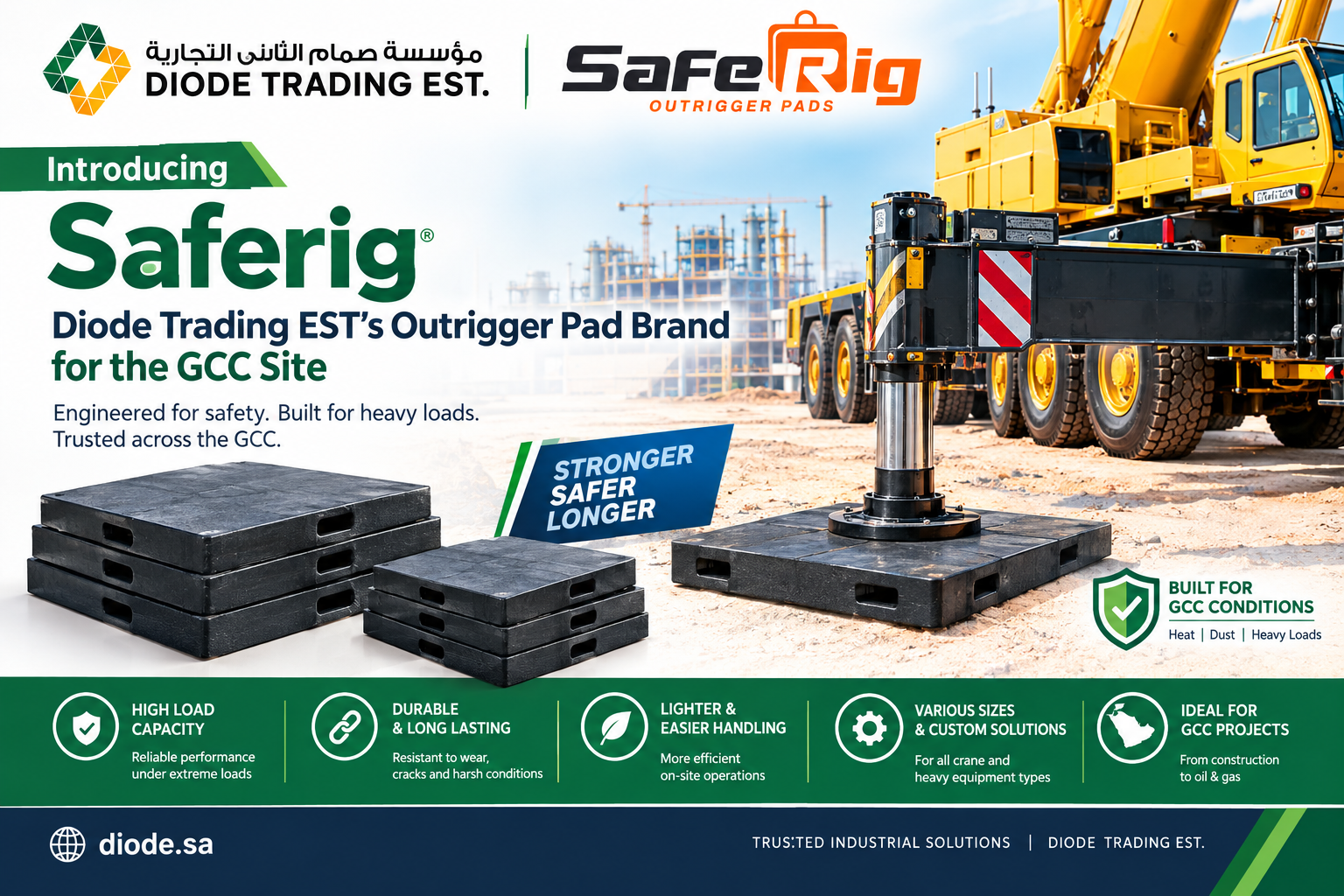
Saferig is Diode Trading EST's outrigger pad
Read more
12 September, 2026 | AdminTimber cribbing was the default for decades.
Read more