 09 September, 2026 |
  Admin
Admin
Outrigger Pads for Grove (Mani
Grove cranes, manufactured by Manitowoc, are
Read more
 07 September, 2026 | Admin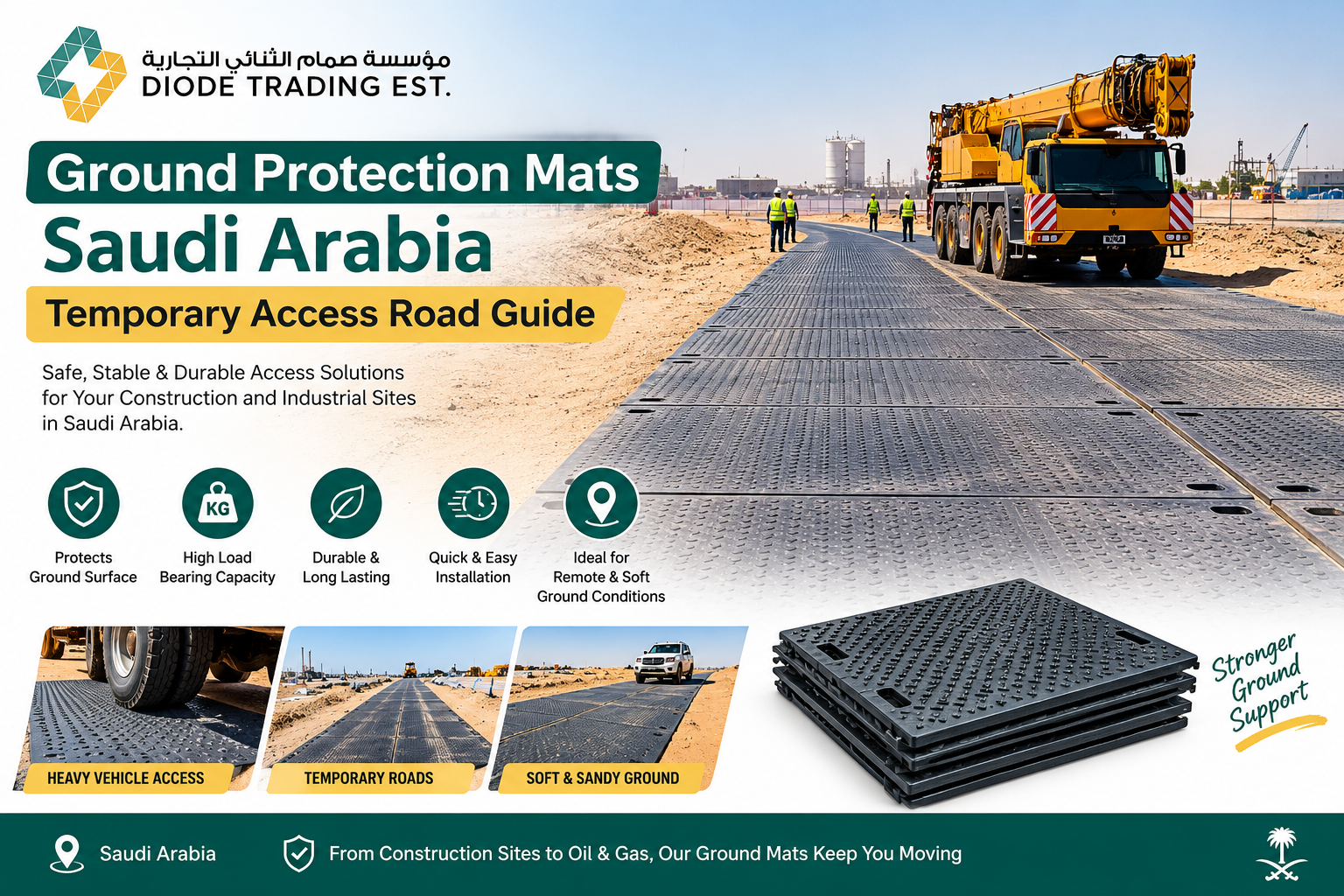
Getting heavy equipment across soft or unstable ground without turning the site into a mud pit is exactly what
temporary Rubber Tiles in Saudi Arabia ground protection mats are for.
Beyond keeping vehicles moving, a temporary mat road also protects the site itself. Repeated truck and crane traffic on unprotected ground compacts soil, ruts access routes, and on landscaped or agricultural land can damage the surface long after the project finishes. Laying mats before heavy traffic starts is generally far cheaper than repairing rutted ground, regrading a haul road, or dealing with a stuck vehicle mid-project.
• Temporary haul roads across desert or sabkha ground
• Equipment laydown and storage yards
• Wind and solar farm construction access routes
• Pipeline right-of-way access
Most temporary access mats supplied in the Kingdom are made from high-density polyethylene (HDPE) or, for heavier plant traffic, UHMWPE ground protection mats. Both materials resist the UV exposure and surface temperatures common on Saudi sites without becoming brittle, and the interlocking pin-and-loop edges on most panels let crews build a continuous roadway without gaps that plant or vehicle tires could catch on. Panel surfaces are usually textured or ribbed on at least one face to keep traction acceptable even when the mats get muddy or wet.
Panel thickness is generally matched to the heaviest vehicle expected to cross the mat, not the average one. Lighter panels are adequate for pedestrian walkways and light vans, while crane, piling rig, and heavy haul routes call for thicker, reinforced panels rated for concentrated axle loads. It’s worth checking the panel’s rated load capacity against the axle weight of the heaviest equipment on site, including it fully loaded, rather than its empty weight.
Panel weight is also a practical consideration, since it affects how quickly a crew can lay and relocate a mat road by hand versus needing a forklift or telehandler on site. Standard panel widths are usually sized to match common truck and crane track widths, so two panels laid side by side form a full-width lane without excessive overlap or gaps at the edges.
Ground protection mats and outrigger pads solve related but different problems: mats spread load across a travel path so equipment can drive or walk over soft ground, while outrigger pads spread load under a single stationary support point such as a crane outrigger. Many sites end up using both together. See our guide on ground protection mats vs. outrigger pads for a fuller comparison.
Clear larger debris and rocks from the route before laying panels, since sharp protrusions can eventually work through even a thick HDPE panel under repeated loading. On loose desert sand, the same bearing-pressure logic used to size outrigger pads for sandy ground also applies to mat selection: a wider footprint lowers the pressure the ground actually sees. After the job, hose off accumulated mud before stacking mats for storage, and store them flat where possible to avoid long-term warping in direct sun.
For a single short-term project, many contractors in the Kingdom rent mats for the duration of the works and return them once the access road or laydown area is no longer needed. For contractors running multiple sites through the year, or projects with an extended duration, purchasing a mat inventory outright is often the more cost-effective route once rental costs are compared over several projects. Either way, it helps to confirm delivery lead times up front, since mat requirements often surface only once earthworks reveal how soft the actual ground conditions are.
FAQ
See our range of high-visibility safety mats and markers designed to reduce trip hazards across your site.
 09 September, 2026 | Admin
Grove cranes, manufactured by Manitowoc, are
Read more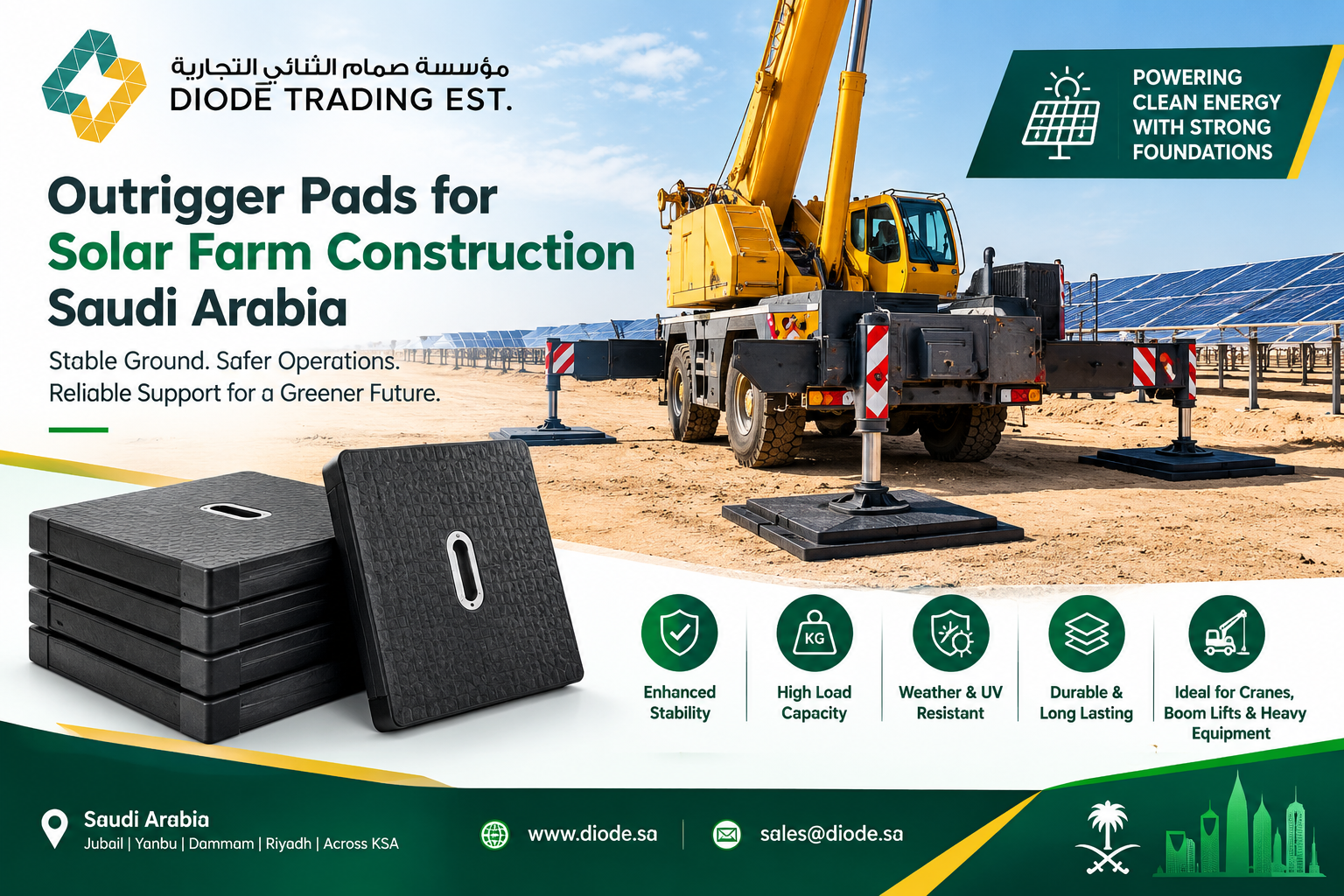 09 September, 2026 | Admin
Saudi Arabia's solar buildout involves cranes
Read more 08 September, 2026 | AdminPort operators, infrastructure contractors, a
Read more