


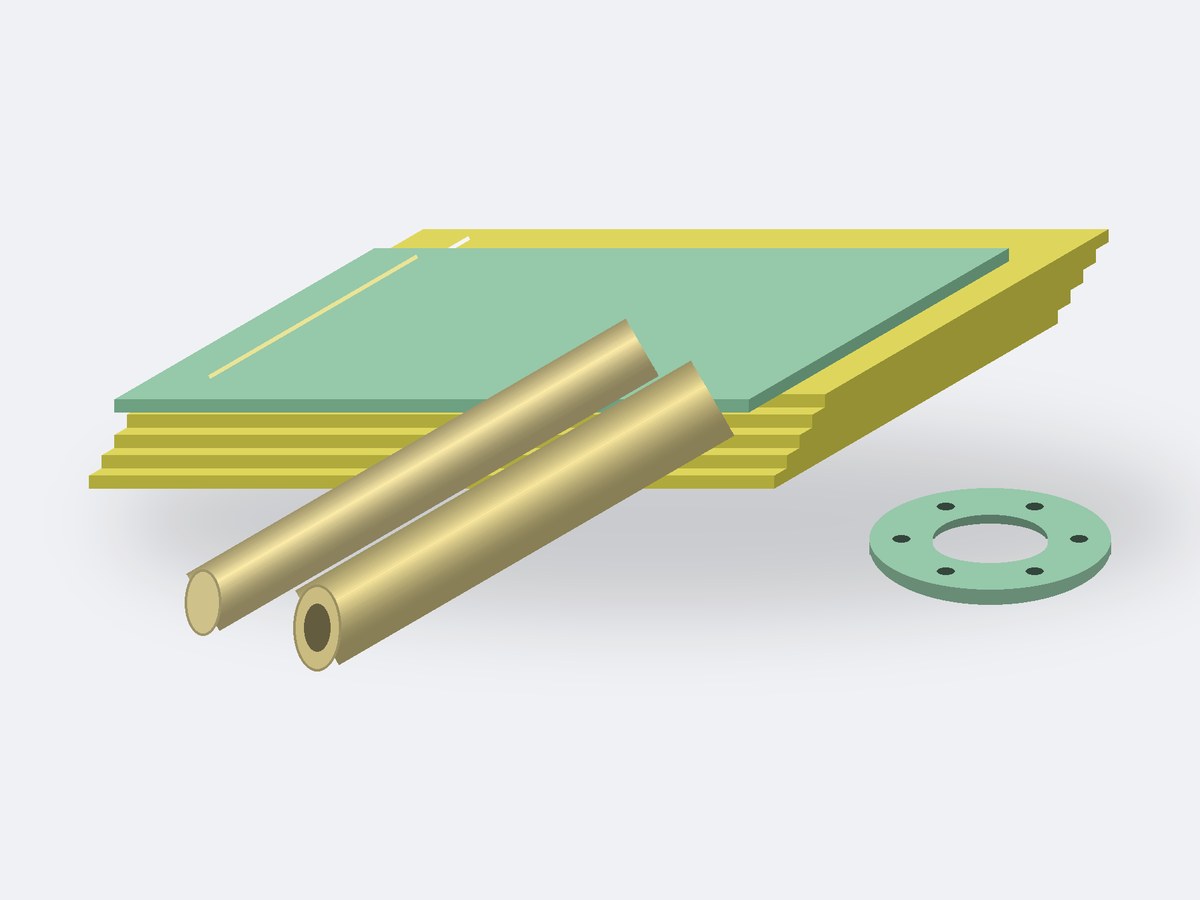
Glass-Epoxy Laminate Sheets, Rods & Tubes
Technical Specification
| Also Known As | Glass-epoxy laminate, epoxy glass; commonly specified as G10 and FR4 grades |
|---|---|
| Form | Sheets, Rods, Tubes, Machined / fabricated parts |
| Key Properties | High mechanical strength, excellent electrical insulation, low moisture absorption, good dimensional stability, flame-retardant grades available |
| Typical Uses | Electrical insulation, switchgear and transformer parts, flange insulation kits, washers, spacers, coil formers |
| Supply | Full sheets, cut pieces, or CNC-machined components as per drawing |
Key Benefits of Glass-Epoxy Laminates
Glass-epoxy combines woven glass fabric with an epoxy resin, giving a laminate that is both strong and an excellent electrical insulator. Key benefits include:
- High Strength-to-Weight: Much stronger and stiffer than unfilled plastics, without the weight of metal.
- Excellent Electrical Insulation: A standard material for insulating panels, spacers and supports.
- Low Moisture Absorption: Holds its electrical and mechanical properties in humid conditions.
- Machinable to Tight Tolerances: Cuts and machines cleanly into precise washers, spacers and formers.
For lower-cost insulating parts where the strength of glass-epoxy is not required, see our Bakelite (phenolic) sheets and rods.
Common Applications of Glass-Epoxy
Glass-epoxy sheets, rods and tubes are used across electrical and industrial equipment, including:
- Switchgear, panel and transformer insulation
- Flange insulation gaskets, sleeves and washers
- Insulating spacers, supports and terminal boards
- Coil formers and bobbins
- Structural insulating parts in motors and generators
- Jigs, fixtures and wear plates
Glass-Epoxy Products We Supply
- Glass-epoxy sheets — in a range of thicknesses for insulating panels and cut parts
- Glass-epoxy rods — for machined pins, spacers and bushes
- Glass-epoxy tubes — for insulating sleeves and coil formers
- Machined and fabricated items — washers, rings, formers and brackets as per drawing
Glass-Epoxy vs Phenolic — Which Do You Need?
Phenolic (Bakelite) laminates are an economical choice for general electrical insulation. Glass-epoxy is the step up when you need higher mechanical strength, lower moisture absorption and better performance at elevated temperatures.
Send us your drawing, sizes and quantities and our Al Khobar team will confirm availability, lead time and a quotation for delivery anywhere in Saudi Arabia and the GCC.
Frequently Asked Questions
Q1. What is the difference between G10 and FR4?
A. Both are glass-epoxy laminates. FR4 is the flame-retardant version, while G10 is the standard non-flame-retardant grade. Tell us your specification and we will confirm the matching grade.
Q2. Can glass-epoxy be used for flange insulation kits?
A. Yes. Glass-epoxy is commonly used for flange insulation gaskets, sleeves and washers because it combines strength with electrical insulation.
Q3. Do you machine glass-epoxy parts?
A. Yes. We supply sheets, rods and tubes, and machine parts such as washers, spacers and formers to your drawing.
Q4. Is glass-epoxy better than Bakelite?
A. Glass-epoxy is stronger and absorbs less moisture than phenolic (Bakelite), but costs more. Bakelite is often sufficient for general insulating panels.
BRANDS WE TRUST


