


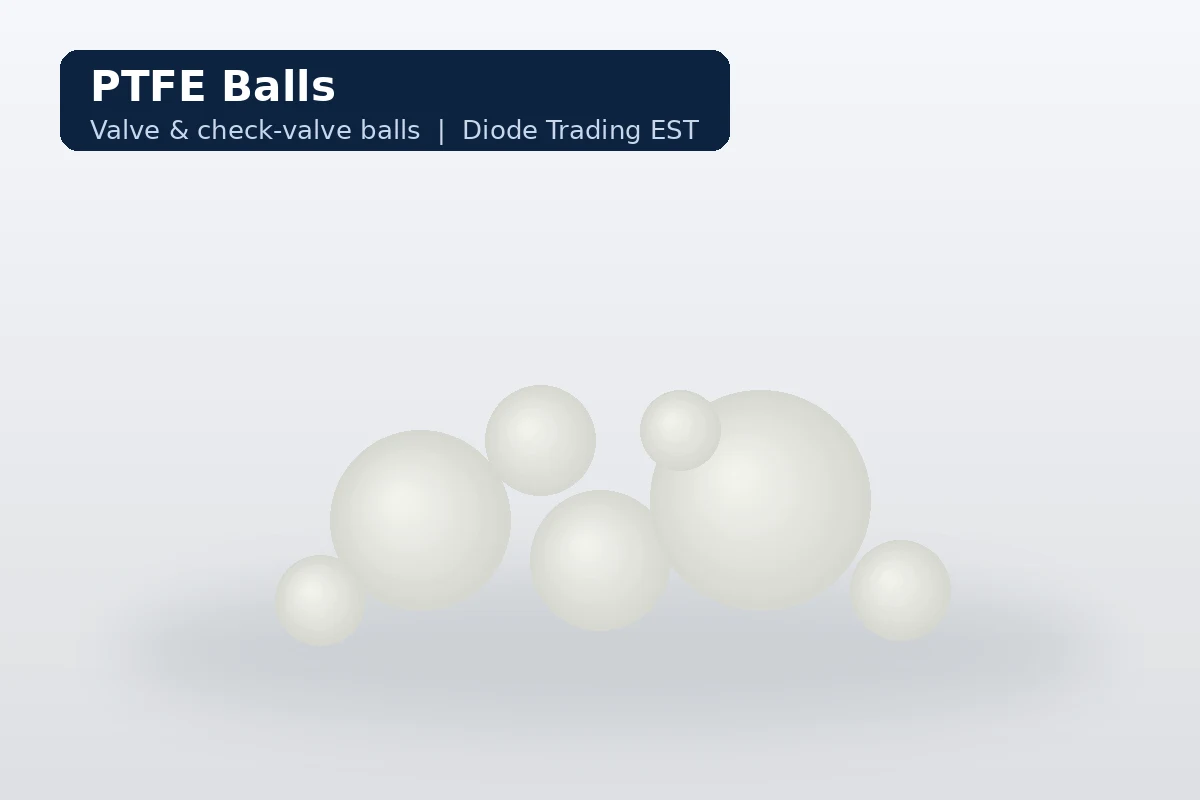
PTFE Balls — Teflon Balls for Valves and Pumps
Technical Specification
| Material: | Virgin PTFE; filled grades on request |
|---|---|
| Sizes: | Range of diameters; contact us for your size and tolerance |
| Service Temperature: | Approx. -200°C to +260°C (virgin PTFE) |
| Chemical Resistance: | Resistant to almost all industrial chemicals |
| Note: | Figures are typical; confirm exact grade, size and rating with our team |
Why PTFE Balls?
- Chemical inertness: ideal for acid, alkali and solvent dosing
- Light weight: PTFE is much lighter than steel or ceramic balls, so check valves respond quickly
- Quiet and non-scratching: does not damage valve seats
- Non-stick: resists scale and residue build-up
Applications
- Check valves in chemical dosing pumps
- Ball and float valves
- Low-load bearings and rollers
- Spray nozzles and agitation media
Information to Send
- Ball diameter and tolerance
- Grade
- Fluid and temperature
- Quantity
See also: PTFE Valve Components, PTFE Machined Components and PTFE (Teflon) Products.
Send us your drawing or sizes, the grade, quantity and service conditions, and our Al Khobar team will confirm availability, lead time and a quotation for delivery anywhere in Saudi Arabia and the GCC. Every order is supplied with a Material Test Certificate.
Frequently Asked Questions
Q1. What are PTFE balls used for?
A. Mainly check valves in chemical dosing pumps, ball valves and low-friction bearings.
Q2. Are PTFE balls resistant to acids?
A. Yes. Virgin PTFE resists almost all acids, alkalis and solvents.
Q3. What sizes of PTFE balls are available?
A. A range of diameters; tell us your size and tolerance.
Q4. Why use PTFE instead of steel balls?
A. For chemical resistance, lighter weight and to avoid damaging valve seats.
BRANDS WE TRUST


